



300+ clinicians, doctors, and dermatologists have shared Svens Island for eczema relief, with no compensation.
Key Takeaways
- Transepidermal water loss (TEWL) is the rate at which water passively evaporates through the skin — and in eczema-prone skin, that rate is elevated.¹
- Elevated TEWL means moisture escapes faster than it can be replaced, leaving skin chronically dry even with regular moisturising.¹
- TEWL is measurably elevated in eczema-prone skin, including areas that appear clear between flares — suggesting the barrier problem exists even when the skin looks calm.¹
- Hot showers, harsh soaps, cold dry air, scratching, and exposure to fragrance or alcohol-based ingredients all worsen TEWL.
- Occlusive ingredients — those that physically slow water evaporation — address TEWL more directly than humectants alone.
- Consistent daily barrier support between flares is more effective than reactive treatment once TEWL-driven dryness has already taken hold.
Dry skin and eczema are connected by a mechanism most people haven't heard of. It's not complicated once you understand it — but it changes how you think about moisturising, flare prevention, and why some creams work better than others.
What Is Transepidermal Water Loss?
Transepidermal water loss — TEWL — is the rate at which water passively evaporates through the skin's outer layers. It's not sweat. It's a constant, invisible process where water diffuses outward through the skin and evaporates from the surface.
In healthy skin, this happens slowly. The skin's barrier — particularly the stratum corneum, the outermost layer — acts as a seal, holding water in and controlling how quickly it escapes. When that seal is intact, TEWL stays within a normal range and the skin maintains its moisture balance.³
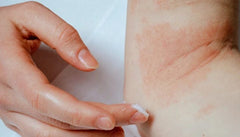
In eczema-prone skin, that seal is compromised. TEWL increases, and the skin loses moisture faster than it can retain it. The result is chronically dry, tight, reactive skin that feels thirsty no matter how much cream you apply.
Why TEWL Is Central to Dry Skin and Eczema
TEWL isn't just a symptom of eczema. Research shows it's measurably elevated in eczema-prone skin, even in areas that show no visible redness or active flare.¹ This means the barrier problem isn't confined to the flare. It exists between flares too. The skin is losing moisture continuously — and that ongoing loss is part of what keeps the skin primed for the next flare.
A landmark study tracking infants found that elevated TEWL measured in the first days of life was significantly predictive of atopic dermatitis developing by 12 months — even before visible symptoms appeared.² TEWL isn't just a consequence of barrier damage. In many cases, it precedes it.
This is one of the clearest explanations for why eczema keeps coming back even when the skin looks calm. The barrier deficit that drives TEWL doesn't resolve when a flare clears. It persists.
What Makes TEWL Worse
Several everyday habits and environmental conditions significantly increase TEWL — and most people with eczema encounter them daily without realising the impact.
Hot showers and baths. Hot water strips the skin's natural lipid barrier, dramatically increasing TEWL in the hours after bathing.
Harsh soaps and cleansers. Soap disrupts the skin's natural pH and removes the lipid layer that helps regulate TEWL.
Cold, dry air. Low humidity — whether from cold outdoor air or heated indoor environments — accelerates evaporation from the skin surface, compounding TEWL. This is why eczema-related dryness and itch are often worse at night when bedroom air is dry.⁴
Scratching. Every scratch physically disrupts the stratum corneum, removing the outer cell layer and creating gaps that accelerate moisture loss.
Fragrance and harsh ingredients. Fragrances and alcohol-based or strongly irritating ingredients can damage the skin's lipid barrier and elevate TEWL with repeated exposure.
For eczema-prone skin, the key is not just to "moisturise more" — it's to reduce what drives TEWL in the first place.
Why Humectants Alone Aren't Enough
Humectants — ingredients like glycerin, hyaluronic acid, and urea — draw water into the skin from the environment or deeper skin layers. They're an important part of any good moisturising formula.
But on their own, they don't slow TEWL. They add water in, but if the barrier isn't repaired or occluded, that water continues to evaporate at an elevated rate. You're filling a leaking vessel without addressing the leak.
Occlusives — ingredients that physically form a layer on the skin surface to slow evaporation — directly target TEWL. They include plant oils, waxes, and butters that create a semi-occlusive seal. The most effective barrier-support formulas combine occlusives, emollients (which soften and support the lipid matrix), and humectants, addressing TEWL from multiple angles rather than just one.
This is also why applying moisturiser immediately after bathing — while the skin is still damp — matters so much. The occlusive layer seals in the water already present on the skin surface, reducing TEWL in the critical window before evaporation accelerates.
The Bacterial Connection
TEWL doesn't operate in isolation. Elevated TEWL can shift the skin's surface environment in ways that affect the microbiome.
When TEWL is high, skin pH can shift toward more alkaline conditions, which reduces the skin's natural antimicrobial activity and makes it more favourable for Staphylococcus aureus (Staph) colonisation. Staph, in turn, produces toxins that further disrupt the barrier — worsening TEWL, driving inflammation, and compounding the dry-skin and eczema connection.
Repairing the skin barrier in eczema isn't just about moisture. It's about creating conditions where the barrier can hold — which means addressing both TEWL and the bacterial environment that barrier dysfunction enables.
What to Look for in a Daily Formula
Not all moisturisers address TEWL effectively. For eczema-prone skin, the daily formula needs to do more than hydrate — it needs to occlude.
Look for formulas that combine occlusive ingredients to slow TEWL directly, emollients to support the lipid barrier, and active botanicals that address the bacterial side of barrier dysfunction. Apply daily — between flares, not just during them — this approach maintains the barrier conditions that reduce TEWL over time and keep the skin less reactive.
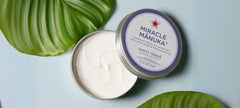
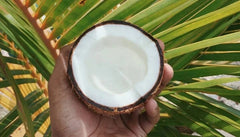
Sven's Island Miracle Manuka Creme is formulated with coconut oil and marshmallow root — occlusive and emollient ingredients that physically slow TEWL and support barrier repair — alongside Manuka leaf oil and Kanuka, both clinically shown to fight Staph bacteria.
It's designed for consistent daily use on eczema-prone skin, addressing both the moisture loss and the bacterial environment that barrier dysfunction enables.
Steroid-free, fragrance-free, and suitable for daily use from birth. 95% of users noticed significant improvement after 2 weeks, and it's trusted by 150,000+ families managing eczema-prone skin.
What the Research Shows
Research consistently shows TEWL is elevated in eczema-prone skin — including non-lesional skin — and correlates with disease severity.¹ Skin-hydration and TEWL measurements are now used clinically to assess barrier status and treatment response in children with eczema.³ A major prospective cohort study found that elevated TEWL measured in newborns on day two of life was significantly predictive of atopic dermatitis developing by 12 months, identifying impaired barrier function as a primary driver rather than a consequence of the condition.²
Emollients and occlusion-based barrier-repair formulas have been shown to effectively reduce TEWL and improve skin barrier function in eczema-prone skin, supporting the use of combination approaches rather than humectant-only products.⁴
Frequently Asked Questions
What is transepidermal water loss?
Transepidermal water loss (TEWL) is the rate at which water passively evaporates through the skin's outer layers. In healthy skin, the barrier slows this process effectively. In eczema-prone skin, the barrier is compromised and TEWL is elevated — meaning the skin loses moisture faster than it can retain it, leading to chronic dryness and increased reactivity.
Why does my skin feel dry even after moisturising?
If TEWL is elevated, moisture applied to the skin surface continues to evaporate at an accelerated rate. Humectant-based moisturisers draw water in but don't slow evaporation; without an occlusive ingredient to form a barrier layer, the water escapes again quickly. An effective formula for eczema-prone skin combines occlusives, emollients, and humectants to address TEWL directly.
Does TEWL get worse at night?
TEWL naturally increases overnight, partly because bedroom environments tend to be dry and partly because skin temperature rises during sleep, accelerating evaporation. This is one reason eczema-related dryness and itch are often worse at night and why applying a good occlusive formula before bed is particularly effective for barrier repair.
What worsens transepidermal water loss in eczema?
Hot showers, harsh soaps, cold dry air, scratching, and exposure to fragrance or alcohol-based ingredients all worsen TEWL. Each disrupts the stratum corneum's ability to slow moisture evaporation, compounding the barrier dysfunction that characterises eczema-prone skin.
Can you reduce TEWL with moisturiser?
Yes — particularly with formulas that contain occlusive ingredients, which physically slow evaporation from the skin surface. Applying moisturiser immediately after bathing to damp skin is particularly effective, as the occlusive layer seals in existing moisture before it evaporates. Regular daily use of an occlusive-containing formula reduces TEWL over time by supporting barrier repair and maintenance.
A Final Thought
TEWL is the mechanism underneath the dryness — the reason skin that looks calm between flares is still quietly losing moisture, still primed for the next flare, still never quite comfortable.
Understanding it changes the approach. Not reactive moisturising when things get bad, but consistent daily barrier support that keeps TEWL in check between flares. That's where the real difference is made.
More than 150,000 Australian families have made the switch. Try Sven's Island Miracle Manuka Creme for 60 days — if your skin doesn't improve, get your money back. No questions asked.
References
¹ Werner Y, Lindberg M. (1985). Transepidermal water loss in dry and clinically normal skin in patients with atopic dermatitis. Acta Dermato-Venereologica, 65(2):102–105. https://pubmed.ncbi.nlm.nih.gov/2408409/
² Kelleher MM, et al. (2015). Skin barrier dysfunction measured by transepidermal water loss at 2 days and 2 months predates and predicts atopic dermatitis at 1 year. Journal of Allergy and Clinical Immunology, 135(4):930–935. https://pubmed.ncbi.nlm.nih.gov/25618747/
³ Hon KL, et al. (2021). Are skin equipment for assessing childhood eczema any good? Journal of Dermatological Treatment, 32(1):45–48. https://doi.org/10.1080/09546634.2020.1774117
⁴ Danby SG, et al. (2013). The effect of emollient-based leave-on barrier creams on transepidermal water loss and skin barrier repair. British Journal of Dermatology, 168(4):814–821. https://doi.org/10.1111/bjd.12128
Mentioned in this article
Works well with Eczema prone skin


- $52.80
-
$104.00 - $52.80
- -37%
- Unit price
- per


- $49.60
-
$89.00 - $49.60
- -30%
- Unit price
- per


- $79.20
-
$145.00 - $79.20
- -32%
- Unit price
- per


- $34.00
-
- $34.00
- -0%
- Unit price
- per


