




300+ clinicians, doctors, and dermatologists have shared Svens Island for eczema relief, with no compensation.
KEY TAKEAWAYS
- Eczema affects around 10% of adults — and around 1 in 4 adult eczema cases begin in adulthood, not childhood
- Adult eczema often presents differently to childhood eczema — more commonly on the hands, face, and eyelids rather than the flexural areas typical in children
- Stress, occupation, and repeated exposure to irritants are among the most significant causes of eczema in adults — on top of the underlying barrier dysfunction and bacterial imbalance present in most cases
- Research shows adults with moderate-to-severe eczema report rates of anxiety and depression significantly higher than the general population
- Hand eczema — strongly associated with atopic dermatitis — affects people in wet-work occupations at disproportionately high rates
- Consistent daily barrier and bacterial balance support is the foundation of long-term management — not reactive treatment when flares appear
Eczema in Adults: Why It Gets More Complicated
Most people think of eczema as a childhood condition. But eczema affects around 10% of adults — and for many, it doesn't follow the trajectory they were promised. It didn't clear up by their teens. Or it went quiet for years and then came back harder in their twenties or thirties, triggered by stress, a new job, or a change in environment.
Eczema-prone skin has a structurally weaker outer barrier — it loses moisture faster, reacts to smaller triggers, and is harder to keep calm than normal skin. That vulnerability doesn't disappear with age. In many adults, it becomes harder to manage because the causes of eczema in adults are more varied, more layered, and harder to identify than in childhood.
A compromised barrier also gives Staphylococcus aureus (Staph bacteria) a foothold. Staph is present on most eczema-prone skin and produces toxins that drive inflammation and itch — keeping the flare cycle going even after the original trigger is long gone.
Why Adult Eczema Presents Differently
Adult eczema doesn't always look like what people expect.
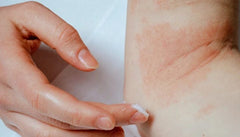
In children, eczema most commonly appears in the flexural areas — the inner elbows, behind the knees, and the neck. In adults, the pattern shifts. Research confirms that adult-onset eczema more commonly presents on the hands, face, eyelids, and feet — areas that are constantly exposed, frequently washed, and under repeated friction or environmental stress.
Hand eczema is particularly significant in adults. Adults with atopic dermatitis have a three to four times higher likelihood of developing hand eczema than those without — and occupational exposures make it worse. Healthcare workers, hairdressers, cleaners, food handlers, and anyone in a wet-work profession faces constant barrier disruption from repeated handwashing, glove use, and exposure to irritants and allergens. For many, it's the point where eczema stops being manageable and starts affecting their ability to work.
Adults who develop eczema for the first time after the age of eighteen also have a subtly different inflammatory profile to those whose childhood eczema persisted. Research shows adult-onset eczema tends to involve more Th1 immune activity alongside the Th2 pathway — which may explain why it can be less responsive to treatments that work well in children, and why it often feels more unpredictable.

The Causes of Eczema in Adults: What's Different
The root causes of eczema — barrier dysfunction, immune dysregulation, and Staph bacteria colonisation — are the same at any age. But in adults, the triggers that activate those underlying vulnerabilities are different in character and harder to unpick.
Stress. Chronic stress is one of the most consistently identified eczema triggers in adults, and one of the hardest to address. The mechanism is biological: elevated cortisol disrupts the skin barrier directly and shifts the immune response toward inflammation. A 2024 review in the Journal of Clinical Medicine found that adults with eczema carry significantly higher rates of depression, anxiety, and alexithymia than the general population — and that the relationship runs in both directions. Eczema causes psychological distress, and psychological distress worsens eczema.
Occupation. Many people are in contact with irritants, allergens, and wet-work conditions throughout their working day — without realising the cumulative damage. Repeated exposure to soaps, detergents, latex, metals, fragrances, and chemicals strips the barrier progressively, lowering the threshold at which a flare can start. For adults with an underlying atopic predisposition, even moderate occupational exposure can be enough to tip a manageable condition into a chronic one.
Dry skin and eczema. As adults age, the skin naturally produces fewer lipids and retains less moisture — a process that accelerates in the thirties and forties. In someone with an already-compromised barrier, this age-related drying compounds barrier dysfunction. Dry skin and eczema become increasingly entangled, making it harder to distinguish between simple dryness and the start of a flare.
Accumulated treatment history. Many adults managing eczema have been through repeated cycles of topical steroids. Prolonged or repeated steroid use can lead to skin thinning, reduced effectiveness over time, and rebound flares — meaning the skin becomes more reactive, not less, as the years go on. This is one reason why adult eczema can feel like it's getting harder to manage even when nothing obvious has changed.

The Emotional Weight Nobody Talks About
Adult eczema doesn't just affect the skin. Its impact on daily life — on confidence, on work, on relationships, on sleep — is substantial and often underestimated.
A large US study found that adults with atopic dermatitis reported significantly higher rates of anxiety (29.8%), depression (31.2%), and sleep disorders (33.2%) compared to matched controls — and that their quality-of-life and work productivity scores were similarly impaired to those seen in adults with psoriasis, a condition long recognised for its psychological burden.
For adults managing eczema that shows on the hands, face, or neck, the visibility of the condition adds another dimension. Visible eczema affects how people present professionally, how comfortable they feel in social settings, and how willing they are to pursue certain careers or relationships.
None of this is a reason for despair — it's a reason to take adult eczema as seriously as it deserves, and to pursue treatment options that addresses the actual drivers rather than just the surface.
What Actually Helps Long-Term
After years of products that work briefly and then stop, it's natural to be sceptical. But the reason most approaches underdeliver isn't that eczema is unmanageable — it's that they only address part of what's driving it.
Standard moisturisers address dryness. Steroid creams address inflammation. Neither addresses the Staph overgrowth that sustains the flare cycle. And neither is designed for the consistent daily use that makes a real difference to barrier function over time.
A long-term approach to adult eczema works on two fronts simultaneously: supporting the barrier every day, and keeping Staph levels low between flares. Not just during a flare. Every day.
Daily barrier support. The barrier is compromised between flares, not just during them. Daily application of an occlusive, emollient formula — applied while the skin is still slightly damp after bathing — reduces transepidermal water loss and keeps the barrier conditions stable enough to be less reactive to the triggers that are harder to remove from adult life.
Addressing the bacterial environment. A formula with targeted antimicrobial botanicals — effective against Staph without disrupting the skin's beneficial bacterial community — used daily as part of the routine, not just during flares.
Knowing which triggers are removable and which aren't. Some adult triggers can be managed with changes to routine — bathing temperature, detergent, fabric choices. Occupational triggers often can't be fully removed, but protective measures (barrier cream before exposure, prompt skin care after) reduce their cumulative impact. Stress is rarely removable, but addressing the itch-sleep cycle (where nighttime itching disrupts sleep, and poor sleep worsens inflammation and flares) and building a consistent daily skin care habit reduces the skin's reactivity to stress-driven flares over time.
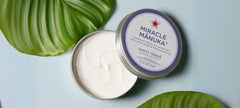
Sven's Island Miracle Manuka Cream is formulated with Manuka leaf oil and Kanuka, both clinically shown to fight 99% of Staph bacteria driving the itch, alongside marshmallow root to support barrier repair. Steroid-free, fragrance-free, and safe for daily use. 95% of users noticed significant improvement after 2 weeks, and it's trusted by 150,000+ families managing eczema-prone skin.
What the Research Shows
Adult eczema is common, underrecognised, and carries a significant quality-of-life burden. A systematic review and meta-analysis found that approximately 26% of adults with atopic dermatitis report adult-onset disease — meaning roughly 1 in 4 adult cases begin after the age of eighteen, with a distinct clinical profile that differs from childhood-onset disease persisting into adulthood.¹
The psychological burden is well-documented. A large US population study found that adults with atopic dermatitis had significantly higher rates of anxiety (29.8%), depression (31.2%), and sleep disorders (33.2%) than matched controls, with quality-of-life scores comparable to those seen in psoriasis.² A 2024 review confirmed that adults with eczema carry higher odds of suicidality, depression, anxiety, and cognitive impairment — and that inflammatory cytokines associated with eczema may directly cross the blood-brain barrier, contributing to central nervous system effects.³
On occupational exposure, a systematic review and meta-analysis found that adults with atopic dermatitis had a 4.3 times higher one-year prevalence of occupational hand eczema than those without — with the association holding across wet-work and general population studies alike.⁴
Research into adult-onset versus childhood-onset atopic dermatitis confirms distinct immune endophenotypes: adult-onset disease shows greater Th1 immune activation alongside Th2, and higher rates of cardiovascular and systemic comorbidities — suggesting adult eczema is not simply a continuation of childhood disease but a condition with its own distinct characteristics.⁵
Frequently Asked Questions
Can you develop eczema as an adult with no childhood history? Yes — around 1 in 4 adults with eczema develop it for the first time after the age of eighteen. Adult-onset eczema has a distinct clinical profile from childhood-onset disease: it more commonly presents on the hands, face, and feet, and tends to involve a broader range of immune pathways. It can be triggered by occupational exposure, stress, hormonal changes, or environmental factors — often without an obvious family history.
Why is my eczema getting worse as an adult? Several factors converge in adulthood. Natural skin lipid production decreases with age, compounding barrier dysfunction. Occupational and environmental exposures accumulate. Chronic stress becomes a consistent driver. Repeated steroid use over the years can reduce skin responsiveness and increase reactivity. And because adult eczema is often still managed with short courses of steroids rather than consistent daily support — the underlying barrier and bacterial drivers are rarely fully addressed.
What's the difference between dry skin and eczema in adults? Dry skin is low-grade and diffuse — a general feeling of tightness or roughness that responds to regular moisturising. Eczema-prone skin has an underlying barrier dysfunction that persists even when the skin looks calm, and dry skin and eczema become harder to distinguish as skin naturally dries with age. The key differences: eczema causes localised, intensely itchy patches that recur in the same areas; the itch is distinct in quality from simple dryness; and standard moisturisers provide only temporary relief because they don't address the bacterial drivers that keep the cycle going.
What are the best creams for atopic eczema in adults? The most effective daily product for atopic eczema addresses both sides of the cycle — barrier repair and Staph bacteria. Look for a steroid-free, fragrance-free formula with occlusive and emollient ingredients to reduce transepidermal water loss, and antimicrobial botanicals clinically shown to fight Staph bacteria. Manuka leaf oil is one of the few ingredients with published research specifically against Staph on eczema-prone skin. Safe for daily long-term use — unlike steroids, which are appropriate for short-term flare control but not continuous maintenance.
How do I manage eczema when my job makes it worse? Barrier cream applied before exposure and immediately after — especially after handwashing — reduces cumulative damage to an already-vulnerable barrier. Opt for fragrance-free, soap-free cleansers rather than standard soap. Gloves for wet work, but with caution — prolonged glove use creates a warm, moist environment that worsens eczema if barrier support isn't applied first. A consistent daily routine outside of work is the most effective buffer against occupational triggers.
Final Thought
Adult eczema is not a condition you simply have to live with. It's a manageable biological mechanism — one that gets more manageable when you address both the barrier and the bacterial environment consistently, rather than reacting when things get bad.
Years of failed products doesn't mean eczema is unmanageable. It usually means the approach has been incomplete.
Try Miracle Manuka Cream for 60 days. If your skin doesn't improve, get your money back — no questions asked.
REFERENCES
¹ Lee HH, et al. (2019). A systematic review and meta-analysis of the prevalence and phenotype of adult-onset atopic dermatitis. Journal of the American Academy of Dermatology. https://pubmed.ncbi.nlm.nih.gov/30668964/
² Eckert L, et al. (2017). Impact of atopic dermatitis on health-related quality of life and productivity in adults in the United States. Journal of the American Academy of Dermatology. https://pubmed.ncbi.nlm.nih.gov/28366382/
³ Courtney A, et al. (2024). The Psychology of Atopic Dermatitis. Journal of Clinical Medicine. https://consensus.app/papers/details/6e600949279c545bab274bb16a57ed47/
⁴ Ruff S, et al. (2018). The association between atopic dermatitis and hand eczema: a systematic review and meta-analysis. British Journal of Dermatology. https://pubmed.ncbi.nlm.nih.gov/29369341/
⁵ Facheris P, et al. (2023). Age of onset defines two distinct profiles of atopic dermatitis in adults. Allergy. https://consensus.app/papers/details/7b9c826c65765f3ba69adebbde3e29db/
Mentioned in this article
Works well with Eczema prone skin


- $52.80
-
- $52.80
- -0%
- Unit price
- per


- $49.60
-
- $49.60
- -0%
- Unit price
- per


- $79.20
-
$145.00 - $79.20
- -32%
- Unit price
- per


- $34.00
-
- $34.00
- -0%
- Unit price
- per


