



300+ clinicians, doctors, and dermatologists have shared Svens Island for eczema relief, with no compensation.
Key Takeaways
- Baby eczema affects around 1 in 5 infants in Australia — most cases appear in the first six months of life
- Infant skin is structurally thinner and more permeable than adult skin, making it more vulnerable to moisture loss, irritant penetration, and bacterial colonisation
- Research shows Staphylococcus aureus (Staph bacteria) can appear on infant skin before eczema is clinically diagnosed — it's not just a consequence of flares, it actively contributes to them
- Fragrance, soap, and synthetic fabrics are among the most common triggers for baby eczema
- Consistent daily barrier support applied during calm periods matters as much as treatment during flare
Why Baby Skin Is Different
Newborn and infant skin isn't just small adult skin. It's structurally different — and those differences explain why baby eczema presents so early, so commonly, and why it can be so hard to shift.
The outermost layer of a baby's skin, the stratum corneum, is thinner and more permeable than adult skin. It loses moisture faster, allows irritants to penetrate more readily, and is significantly more reactive to environmental triggers. The skin barrier continues maturing throughout the first years of life — which means eczema in the first twelve months is happening on a foundation that's still developing.
Many babies with eczema also carry a genetic variant that reduces their production of filaggrin — the protein that binds skin cells together and maintains barrier integrity. Research confirms that filaggrin mutations are associated with eczema in infancy, dry skin, and significantly increased transepidermal water loss in the first months of life. A compromised barrier from birth creates the conditions in which eczema takes hold.
This matters because it explains why baby eczema isn't simply about dryness. The skin's structural vulnerability is what opens the door to moisture loss, irritant sensitivity, and bacterial imbalance — all at once.

Where It Tends to Appear (And Why)
In babies, eczema almost always appears first on the face — particularly the cheeks and forehead. This is partly because facial skin is thinner and more exposed, and partly because babies rub their faces against fabric and bedding constantly, causing repeated minor friction damage.
From the face, eczema tends to spread to the scalp, neck, and behind the ears. It extends to the inner elbows and knees as the baby becomes more mobile. In younger infants, the nappy area is typically spared — the warmth and humidity, while not ideal, can actually protect this area compared to exposed skin.
This pattern is different from toddler and adult eczema, which more commonly affects the body's flexural areas. Recognising where to look in the 0–12 month period helps parents identify eczema earlier and respond faster.
Cradle cap — the scaly, yellowish patches on the scalp — is technically seborrhoeic dermatitis, a separate condition driven by a yeast on the skin's surface. It's extremely common and usually resolves on its own. Some babies have both simultaneously, which can make the scalp look quite inflamed. Your GP can help distinguish between them.
This pattern shifts as babies grow. For older children, our toddler eczema guide covers how presentation and management changes from twelve months onward.

The Bacterial Side Most People Don't Know About
This is the part of baby eczema that most parents are never told — and it's one of the most important.
Staphylococcus aureus (Staph bacteria) isn't just a complication of eczema. Research shows that Staph colonisation on infant skin can precede the clinical diagnosis of eczema by weeks — appearing in elevated levels before visible symptoms develop. A 2017 prospective birth cohort study found that Staph was more prevalent on infant skin at three months in babies who went on to develop eczema, and was elevated at the time of eczema onset compared to infants of the same age without the condition.
Once present, Staph actively sustains the flare cycle. It produces toxins that disrupt the skin barrier, trigger inflammatory responses, and directly activate itch receptors. In infant skin, where the barrier is already thin and permeable, it's easier for Staph to colonise. And it's harder to shift once established.
This is why standard moisturisers — even applied consistently — often don't produce the lasting improvement parents hope for. They hydrate well and address the dryness side of the equation. They don't address the bacterial environment that keeps the cycle going. A product that tackles both — barrier repair and Staph — gives infant skin a more complete foundation to recover.
Common Baby Eczema Triggers in the First Year
Baby eczema doesn't have one cause — but it does have reliably common triggers in the 0–12 month period. Identifying and reducing them makes a meaningful difference.
Fragrance. The most common hidden irritant in baby skincare. Many products labelled "gentle" or "natural" contain fragrance compounds that are among the leading causes of contact reactions in sensitive skin. Even products labelled "unscented" can contain masking fragrances. For baby eczema, fragrance-free is the only reliable standard.
Soap and detergents. Standard soap can disrupt the skin's pH and strips the natural lipid layer that helps maintain the barrier. Use soap-free cleansers for bathing. Wash clothing and bedding in fragrance-free, dye-free detergent — residue left in fabric after washing is often an overlooked source of irritation.
Synthetic fabrics. Polyester and nylon trap heat and moisture and create friction against sensitive skin. Dress your baby in soft, loose-fitting cotton or bamboo wherever possible, particularly for sleepwear.
Hot water. Water that's too warm strips the skin's natural oils and elevates skin temperature, which amplifies itch. Bathe in lukewarm water (around 27–30°C), for no more than ten minutes.
Saliva. Babies drool a lot in their first year of life, and saliva is mildly acidic and enzymatic — it irritates the skin around the mouth and chin with repeated contact. Gently patting the area dry (not wiping) and applying a protective barrier cream to the chin before feeds helps.
Food allergens — with important nuance. Food allergy and eczema are related but distinct. Some foods — most commonly egg, cow's milk, wheat, and peanut — can contribute to flares in a subset of infants. But most baby eczema is not food-driven. Eliminating foods without medical guidance can create nutritional gaps and doesn't address the skin barrier and bacterial drivers present in almost all cases. See your GP before removing anything from your or your baby's diet.
What's Safe to Use on Baby Skin
The first concern for every parent is safety. Baby skin is more absorbent than adult skin — ingredients penetrate more readily, making formulation choices even more important.
Emollients and barrier repair products are the foundation of daily management and are safe for continuous use from birth. The best cream for baby eczema is fragrance-free, developed specifically for eczema-prone skin, and free from methylisothiazolinone and essential oils — all common irritants found even in products marketed as natural.
Steroid creams are commonly prescribed for baby eczema and are effective at calming acute flares. They're generally safe for short-term use under medical guidance. Infant skin is more absorbent than adult skin, which means topical steroids penetrate more readily — most dermatologists recommend using the lowest effective potency for the shortest time, always combined with consistent barrier support to reduce how often steroids are needed. They don't repair the barrier or address Staph, which is why consistent daily barrier care between steroid courses matters so much.
Antimicrobial botanicals Manuka leaf oil is clinically shown to fight Staph bacteria, making it safe and effective for daily use on infant skin without the concerns that come with steroid creams.
Wet wrap therapy can provide meaningful relief during severe flares in infants — applying a barrier cream to eczema-affected skin under damp cotton bandages and a dry layer forces hydration into the skin and creates a physical barrier against scratching. Clinical studies in children show it can significantly improve symptoms when used appropriately and for limited periods. Always consult your GP or paediatrician before beginning wet wrapping in infants.
Building a Daily Routine That Works
The most common mistake in managing baby eczema is treating it reactively — applying products when the skin is bad and stopping when it clears. The barrier is still fragile when the skin looks calm. Staph levels are still elevated. The conditions for the next flare are already in place.
Effective management for infant eczema requires a consistent daily routine, applied through both flares and the quiet periods between them. The between-flare period is actually when consistent care matters most — it's when the skin has the best chance to strengthen before the next cycle begins.
Bathing: Lukewarm water, ten minutes maximum, using a soap-free fragrance-free cleanser. Pat dry gently — don't rub. Apply your barrier product immediately while the skin is still slightly damp.
The three-minute window: The window immediately after bathing — while the skin is still damp — is when absorption is highest and the barrier benefits most from what's applied. Don't let the skin fully dry before applying.
Morning and evening: Apply a fragrance-free, barrier-supportive product to eczema-prone areas twice daily. Once in the morning, once before sleep. Consistency across both application times matters more than the quantity applied at any single time.
Overnight: Eczema itch peaks overnight in babies, partly because skin temperature rises during sleep and partly because the warm environment under bedding promotes Staph activity on the skin surface. A good barrier and Staph-addressing product applied before sleep reduces both drivers through the night. Keep the bedroom cool, use cotton or bamboo bedding washed in fragrance-free detergent, and keep nails trimmed short.
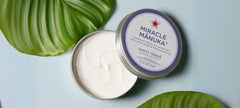
Sven's Island Miracle Manuka Cream is formulated with Manuka leaf oil and Kanuka, both clinically shown to fight Staph bacteria, alongside marshmallow root to support barrier repair. Steroid-free, fragrance-free, and safe from birth. 95% of users noticed significant improvement after 2 weeks, and it's trusted by 150,000+ families managing eczema-prone skin.

When to See a Doctor
Most baby eczema can be managed at home with a consistent daily routine. Some signs require medical attention.
Signs of bacterial infection: honey-coloured crusting, yellow or white discharge, pustules, or skin that seems painful rather than itchy. These suggest Staph has moved from colonisation into active infection and may need oral antibiotics.
Eczema not responding after four to six weeks of consistent daily management, or affecting large areas of the body.
Significant sleep disruption — both yours and the baby's — that's affecting daily function and not improving with consistent skin management.
Suspected food allergy: if you notice consistent flaring within a few hours of breastfeeding after you've eaten a particular food, or after introducing a new food. Your GP can arrange appropriate testing and guidance.
Fever, generally unwell, or rapidly spreading skin warmth and swelling — these require same-day medical assessment.
What the Research Shows
Research consistently confirms that atopic dermatitis in infancy is driven by an interaction between genetic barrier vulnerability, immune dysregulation, and early bacterial colonisation.
Filaggrin loss-of-function mutations are present in approximately 9% of European infants and are strongly associated with eczema in the first year of life — linked to increased transepidermal water loss, dry skin, and early-onset atopic disease.¹ Critically, research shows that different molecular pathways lead to eczema in infants with filaggrin mutations and those without — meaning barrier vulnerability is not the only route, and that immune and environmental factors interact with genetic predisposition in complex ways.²
On the bacterial side, a 2017 prospective birth cohort study (Meylan et al.) found that Staph colonisation on infant skin was elevated at three months — before clinical eczema appeared — and was significantly higher at the time of eczema onset compared to unaffected age-matched infants.³ A separate 2023 cohort study of 450 infants confirmed that Staph colonisation at two months was more common in infants who later developed eczema (adjusted hazard ratio 1.97), supporting the view that early bacterial changes may contribute to rather than simply follow eczema onset.⁴
Daily barrier support is the management foundation with the strongest evidence base. A randomised controlled trial by Simpson et al. found a 50% relative risk reduction in atopic dermatitis in high-risk neonates using daily emollient from birth — though larger trials have produced mixed results, likely reflecting differences in product formulation and application consistency.⁵ The evidence supports consistent daily application with appropriate products rather than any single formula as universally preventive.
Frequently Asked Questions
What does baby eczema look like? In the first six months, baby eczema typically appears as red, dry, or rough patches on the cheeks and forehead. It may look weepy or crusted during a flare, or simply dry and slightly raised during calmer periods. The skin often looks worse after bathing or when the baby is warm. If the patches are scaly and yellowish, particularly on the scalp, this may be cradle cap rather than eczema — your GP can help distinguish between them.
How long does baby eczema last? Many children improve significantly as their skin barrier matures through the toddler years. Some outgrow eczema by school age. Others manage it into adolescence or adulthood. There's no reliable way to predict which path a child will follow — but consistent daily skin care in infancy gives the skin barrier the best chance to strengthen over time.
Is baby eczema caused by something I did during pregnancy? No. Eczema is driven by a combination of genetic factors, immune system development, and environmental exposures — none of which are caused by anything a parent does during pregnancy. It's extremely common, affecting around 1 in 5 infants. The guilt that comes with watching your baby scratch is understandable, but it's not warranted.
Should I stop breastfeeding if my baby has eczema? No — there's no evidence that breastfeeding causes or worsens eczema, and some evidence that it may be protective. If you suspect a specific food in your diet is triggering your baby's flares, speak to your GP before eliminating anything, as dietary restriction while breastfeeding requires careful management.
Can I use steroid cream on my baby? Short-term use under medical guidance is generally considered safe for infants. Baby skin is more absorbent than adult skin, which means frequent or prolonged use carries a higher risk than in adults. Most dermatologists recommend the lowest effective potency for the shortest necessary period, alongside daily barrier support to reduce how often steroids are needed. Never use a steroid cream on your baby without GP guidance.
Final Thought
Baby eczema is not a reflection of how you're caring for your child. It's a biological condition — a skin barrier that needs more support than average, in a bacterial environment that most standard products never address.
Consistent daily care is what changes the baseline over weeks and months.
Try Miracle Manuka Cream for 60 days. If your baby's skin doesn't improve, get your money back — no questions asked.
References
¹ Hoyer A, et al. (2021). Filaggrin mutations in relation to skin barrier and atopic dermatitis in early infancy. British Journal of Dermatology. https://pubmed.ncbi.nlm.nih.gov/33421117/
² Stamatas GN, et al. (2024). Early Skin Inflammatory Biomarker is Predictive of Development and Persistence of Atopic Dermatitis in Infants. Journal of Allergy and Clinical Immunology. https://pubmed.ncbi.nlm.nih.gov/38280528/
³ Meylan P, et al. (2017). Skin Colonization by Staphylococcus aureus Precedes the Clinical Diagnosis of Atopic Dermatitis in Infancy. Journal of Investigative Dermatology, 137(12):2497–2504. https://pubmed.ncbi.nlm.nih.gov/28774556/
⁴ Rinnov MR, et al. (2023). The association between S. aureus colonization on cheek skin at 2 months and subsequent atopic dermatitis in a prospective birth cohort. British Journal of Dermatology. https://pubmed.ncbi.nlm.nih.gov/37243444/
⁵ Simpson EL, et al. (2014). Emollient enhancement of the skin barrier from birth offers effective atopic dermatitis prevention. Journal of Allergy and Clinical Immunology, 134(4):818–823. https://pubmed.ncbi.nlm.nih.gov/25282564/
Mentioned in this article
Works well with Eczema prone skin


- $52.80
-
$104.00 - $52.80
- -37%
- Unit price
- per


- $49.60
-
$89.00 - $49.60
- -30%
- Unit price
- per


- $79.20
-
$145.00 - $79.20
- -32%
- Unit price
- per


- $34.00
-
- $34.00
- -0%
- Unit price
- per


