






300+ clinicians, doctors, and dermatologists have shared Svens Island for eczema relief, with no compensation.
KEY TAKEAWAYS
- Contact dermatitis is an inflammatory skin reaction caused by direct contact with an irritant or allergen — not by internal factors like genetics or immune dysfunction alone
- There are two distinct types: irritant contact dermatitis (the most common, caused by physical damage to the skin barrier) and allergic contact dermatitis (an immune response to a specific substance)
- The most common causes of contact dermatitis include fragrances, preservatives, nickel, soaps and detergents, cleaning products, and rubber or latex
- Identifying and removing the trigger is the foundation of management — without this step, no topical treatment will fully resolve it
- People with eczema-prone skin have a lower threshold for contact reactions and are more likely to develop contact dermatitis on top of their existing condition
- A fragrance-free, barrier-supportive daily routine helps protect already-sensitive skin from the triggers it encounters every day
What Is Contact Dermatitis?
Contact dermatitis is an inflammatory skin reaction that occurs when something touching the skin causes irritation or triggers an immune response. Unlike atopic dermatitis — which is driven by genetic barrier dysfunction and an overactive immune system — contact dermatitis has a specific external cause. Remove that cause, and the skin can recover. Leave it in place, and no cream in the world will fully resolve it.
It's one of the most common reasons for dermatitis in adults, affecting an estimated 15–20% of the general population at some point in their lives. It's also the most prevalent occupational skin disease — accounting for up to 95% of all work-related skin disorders.
Contact dermatitis comes in two distinct forms, and understanding which one you're dealing with changes everything about how you manage it.
Irritant Contact Dermatitis: The Most Common Type
Irritant contact dermatitis (ICD) accounts for around 80% of all contact dermatitis cases. It doesn't involve an allergic immune response — instead, it results from direct physical damage to the skin's outer barrier.
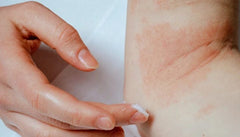
When the skin is exposed repeatedly to something that strips its protective layer — soaps, detergents, cleaning products, solvents, or even water — the barrier breaks down faster than it can repair itself. The skin becomes red, dry, cracked, and inflamed. In more acute cases, exposure to a strong irritant (like an industrial chemical) can cause blistering within hours.
ICD is a condition of accumulation. A single handwash rarely causes a problem. But fifty handwashes a day — as a healthcare worker, parent of young children, or cleaner — is a very different story. The damage builds over time, often without a clear "moment" when things went wrong, which is one reason people don't always connect what they're doing to what they're experiencing on their skin.
The key features of ICD:
- Stinging or burning more than intense itch (different from atopic dermatitis, where itch dominates)
- Well-defined patches that correspond to the area of contact
- Improves when the irritant is removed; worsens with continued exposure
- No prior sensitisation required — it can happen to anyone with enough exposure

Allergic Contact Dermatitis: When the Immune System Overreacts
Allergic contact dermatitis (ACD) is less common but more complex. It's a delayed immune response — technically a Type IV hypersensitivity reaction — driven by T-cells that have become sensitised to a specific substance called a hapten.
Here's how it works: on first exposure to a substance, the immune system identifies it as a threat and builds a sensitisation response. This first exposure causes no visible reaction. But on subsequent exposures — sometimes weeks, months, or even years later — the immune system activates a full inflammatory response. The result is the classic symptoms: redness, itch, swelling, and sometimes blistering, appearing 12–72 hours after contact.
The delay between exposure and reaction is one of the reasons ACD is so hard to identify without professional patch testing. Someone can use a product for years without a problem, develop a sensitisation, and then react to that same product every time they use it — without making the connection.
The most commonly identified allergens in patch testing include fragrance compounds (present in cosmetics, household products, and even some "unscented" products), nickel (jewellery, belt buckles, phone cases), preservatives like methylisothiazolinone (found in many wet wipes and skincare products), cobalt, rubber accelerators, and hair dye chemicals (particularly p-phenylenediamine or PPD).
Common Causes of Contact Dermatitis: What to Look For
The most frequently implicated causes of contact dermatitis in everyday life fall into a few reliable categories.
Fragrances. Fragrance is consistently among the most common causes of allergic contact dermatitis. The term "fragrance" on an ingredient label can cover dozens of individual chemical compounds, any one of which can trigger sensitisation. Importantly, "unscented" is not the same as "fragrance-free" — unscented products often contain masking fragrances that still carry allergen risk. Fragrance allergy has also been shown to increase over time, not decrease — meaning a product someone has used for years can suddenly begin to trigger a reaction once sensitisation develops.
Preservatives. Methylisothiazolinone (MI) and methylchloroisothiazolinone (MCI) are among the most common preservative allergens identified in recent years. They appear in wet wipes, shampoos, conditioners, moisturisers, cleaning products, and industrial fluids. The EU has significantly restricted MI in leave-on cosmetics following sharp increases in sensitisation rates — but it remains widely used in rinse-off products and many non-EU markets.
Nickel and metals. Nickel is one of the most prevalent contact allergens worldwide, particularly in women, due to long-term exposure through jewellery. It's also found in belt buckles, watch straps, phone cases, and some food utensils. Cobalt often co-occurs with nickel sensitisation. Chromate sensitisation is more common in men, associated with cement and leather exposure.
Soaps and detergents. These are primary irritants rather than allergens — they cause ICD by stripping the skin's lipid barrier with repeated exposure. The hands are the most commonly affected area. Even mild soaps, used frequently enough, can cause significant ICD in people with an underlying skin barrier vulnerability.
Rubber and latex. Rubber accelerators used in glove manufacture are a common occupational allergen, particularly for healthcare workers. Latex allergy (an IgE-mediated immediate hypersensitivity, distinct from typical ACD) is less common but potentially severe.
Foods that trigger dermatitis. Food allergens can cause systemic contact dermatitis in people who are already sensitised through skin contact. Nickel — found in foods like oats, legumes, nuts, and chocolate — is the most well-documented example. People with nickel ACD who consume high-nickel diets may experience flares that don't respond to topical avoidance alone. Other food-related triggers include balsam of Peru (found in citrus fruits, tomatoes, and spices) and certain food additives.
How Contact Dermatitis and Eczema Interact
People with atopic dermatitis (eczema) have a structurally compromised skin barrier that allows allergens and irritants to penetrate more readily than normal skin. They're also more likely to use multiple skincare products and emollients — each of which carries its own allergen load.
Research consistently confirms that people with eczema are significantly more likely to develop allergic contact dermatitis on top of their eczema. A large retrospective analysis found that over 52% of adults with a history of atopic dermatitis who were referred for patch testing received a final diagnosis of ACD — suggesting that contact allergens frequently coexist with and worsen atopic disease.
This creates an important clinical problem: when eczema stops responding to treatment, or suddenly worsens in an area that was previously stable, a contact allergen may be the reason. The common culprits in people managing eczema are fragrances in skincare products, preservatives in emollients and wet wipes, and lanolin — an ingredient in many "eczema creams" that is itself a known contact allergen in sensitised individuals.
Managing Contact Dermatitis: What Actually Helps
Step 1: Identify and remove the trigger. This is non-negotiable. Without identifying and removing the cause of contact dermatitis, management is just symptom control. For straightforward ICD — caused by repeated handwashing or occupational exposure — the trigger is usually identifiable. For ACD, patch testing by a dermatologist is the gold standard. Patch testing involves applying a series of standardised allergens to the back under occlusion, then reading reactions at 48 and 96 hours.
Step 2: Protect the barrier. Once the trigger is removed, the skin needs support to repair. A damaged skin barrier increases transepidermal water loss — the rate at which moisture evaporates through the skin — leaving it drier, more reactive, and more vulnerable to further irritation. A good barrier cream applied consistently, particularly before potential exposures and after handwashing, reduces this permeability.
Step 3: Soothe active inflammation. During an active contact dermatitis reaction, topical corticosteroids are effective at calming inflammation quickly when used as directed by a GP or dermatologist. They're appropriate for short-term management of a flare. For ongoing maintenance and prevention, a steroid-free formula applied daily supports the barrier without the concerns associated with long-term steroid use.
Step 4: Choose products carefully. For anyone with a history of contact dermatitis — or eczema-prone skin that may have a lower threshold for reactions — fragrance-free, preservative-free, and minimal-ingredient formulas are the standard to look for in every skincare product.
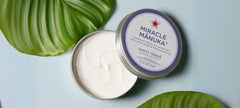
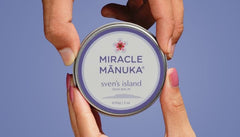
Sven's Island Miracle Manuka Cream is fragrance-free and formulated with Mānuka leaf oil and Kānuka — botanicals that help calm redness and soothe irritated skin — alongside marshmallow root to support barrier repair. Steroid-free and safe for daily use. 95% of users noticed significant improvement after 2 weeks, and it's trusted by 150,000+ families.
For skin that's reactive from contact exposure, consistent daily barrier support gives it the best environment to recover and stay resilient.
What the Research Shows
Contact dermatitis is among the most common inflammatory skin conditions globally, with irritant contact dermatitis accounting for approximately 80% of cases and allergic contact dermatitis for the remainder.¹ Occupational contact dermatitis constitutes up to 95% of all occupational skin disorders, with hand eczema the most prevalent presentation in wet-work professions.²
Fragrance compounds and nickel consistently rank among the most common contact allergens identified in patch-tested populations worldwide. A large retrospective analysis of North American patch test data from 2001 to 2018 confirmed that nickel sulfate and fragrance mix I were among the top relevant allergens across hand, foot, and eyelid presentations — regardless of body location.³ Preservative sensitisation, particularly to methylisothiazolinone, has been a significant emerging concern — regulatory restriction of MI in leave-on cosmetics in the EU led to a measurable reduction in sensitisation rates, while rates remain elevated in less regulated markets.⁴
The intersection of atopic dermatitis and allergic contact dermatitis is clinically important. Research confirms that over 52% of adults with atopic dermatitis history referred for patch testing received a final diagnosis of ACD.⁵ Common relevant allergens in this population include lanolin, neomycin, formaldehyde, and fragrances — ingredients frequently found in products marketed specifically for eczema-prone skin.⁵
Systemic contact dermatitis — where ingested allergens (particularly nickel and balsam of Peru in food) trigger widespread skin reactions in sensitised individuals — is a documented but frequently overlooked cause of persistent dermatitis that doesn't respond to topical avoidance alone.⁶
Frequently Asked Questions
What is the most common cause of contact dermatitis? For irritant contact dermatitis, the most common causes are repeated exposure to soaps, detergents, water, and cleaning products — particularly in occupations involving wet work. For allergic contact dermatitis, fragrance compounds, nickel, and preservatives like methylisothiazolinone are among the most consistently identified allergens in patch-tested populations worldwide.
How do I know if I have irritant or allergic contact dermatitis? ICD tends to cause stinging and burning more than intense itch, is well-defined at the contact site, and develops gradually with repeated exposure. ACD typically involves more intense itch, can spread beyond the direct contact site, and develops 12–72 hours after exposure due to the delayed immune mechanism. Both can look similar, particularly in chronic presentations. A dermatologist can conduct patch testing to identify specific allergens — the most reliable way to confirm ACD.
Can foods trigger contact dermatitis? Yes — in people who are already sensitised to certain allergens through skin contact. Nickel is the most common example: people who develop nickel ACD through jewellery or occupational exposure can experience skin flares when consuming high-nickel foods (oats, legumes, nuts, chocolate). This is called systemic contact dermatitis and often doesn't respond to topical treatment alone. Dietary modification under medical guidance may be needed.
Can contact dermatitis make eczema worse? Yes — and it's frequently missed. People with eczema have a more permeable skin barrier, which makes them more likely to develop sensitisation to allergens in the products they use. When eczema suddenly worsens in a previously stable area, or stops responding to treatment, a contact allergen — often in a skincare product — may be contributing. Patch testing is the way to identify it.
How long does contact dermatitis take to clear? Once the trigger is removed, mild to moderate ICD typically improves within two to four weeks with consistent barrier support. ACD can take longer if the allergen is difficult to fully avoid. Active flares treated with topical steroids under medical guidance usually settle within one to two weeks. Complete resolution depends entirely on how well the trigger can be identified and avoided — ongoing low-level exposure will keep the condition active regardless of topical treatment.
Final Thought
Contact dermatitis is a condition with a cause. Find it, and the skin can recover. Leave it in place, and nothing else will fully work.
Once the trigger is gone, consistent barrier support gives the skin what it needs to recover and stay resilient. For skin that's already reactive, applying a daily routine that's fragrance-free and has minimal ingredients makes a real difference.
Try Sven's Island Miracle Manuka Cream for 60 days. If your skin doesn't improve, get your money back — no questions asked.
REFERENCES
¹ Bains SN, et al. (2018). Irritant Contact Dermatitis. Clinical Reviews in Allergy & Immunology, 56(1):99–109. https://consensus.app/papers/details/4b504b59aed95ee2b631b7577278956a/
² Scheinman PL, et al. (2021). Contact dermatitis. Nature Reviews Disease Primers, 7(1):38. https://consensus.app/papers/details/14312c734f515b70aade9f9f5a54a210/
³ Silverberg JI, et al. (2022). Hand and foot dermatitis in patients referred for patch testing: Analysis of North American Contact Dermatitis Group Data, 2001–2018. Journal of the American Academy of Dermatology. https://consensus.app/papers/details/081786c9442c576e8e29472e07aaf7f5/
⁴ Johansen JD, et al. (2022). Novel insights into contact dermatitis. Journal of Allergy and Clinical Immunology, 149(4):1261–1269. https://consensus.app/papers/details/648690f2b40f59a0942f36b098250da5/
⁵ Owen JL, et al. (2018). The Role and Diagnosis of Allergic Contact Dermatitis in Patients with Atopic Dermatitis. American Journal of Clinical Dermatology, 19(3):355–370. https://consensus.app/papers/details/9dcce9771d5e58a493daa33fd5a2290b/
⁶ Aquino M, et al. (2019). Systemic Contact Dermatitis. Clinical Reviews in Allergy & Immunology, 56(1):9–18. https://consensus.app/papers/details/d5c9a0b5604e55c5bfa8fafa782b406d/
Mentioned in this article
Works well with Eczema prone skin


- $52.80
-
- $52.80
- -0%
- Unit price
- per


- $49.60
-
- $49.60
- -0%
- Unit price
- per


- $79.20
-
$145.00 - $79.20
- -32%
- Unit price
- per


- $34.00
-
- $34.00
- -0%
- Unit price
- per


