







300+ clinicians, doctors, and dermatologists have shared Svens Island for eczema relief, with no compensation.
Key Takeaways
- An eczema flare is an acute worsening of symptoms driven by barrier breakdown and bacterial imbalance
- Flares follow a predictable pattern — learning the early signals gives you a real chance to intervene before they escalate
- Common pre-flare signals include increased itch intensity, skin tightening, and faint redness in familiar spots
- Research shows 80–100% of eczema-prone skin carries Staphylococcus aureus (Staph bacteria), compared to around 20% of normal skin
- Acting in the first 24–48 hours can significantly reduce how severe a flare becomes
What Actually Is an Eczema Flare?
Eczema is a chronic condition — it doesn't fully go away, even when the skin looks calm. What most people experience is a cycle between periods of relative calm and periods of active flaring, when symptoms of eczema suddenly intensify.
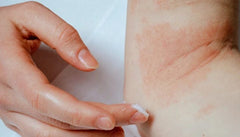
During a flare, skin that felt manageable last week now demands all your attention. The itch worsens. Skin becomes red, inflamed, dry, or weeping. The itch keeps you up all night.
What's important to understand is that a flare isn't a random bad day. It's a biological process — one that tends to escalate in a predictable way once it starts.
Research shows that 80–100% of eczema-prone skin carries Staphylococcus aureus (Staph bacteria), compared to around 20% of normal skin. This bacterial overgrowth actively drives inflammation, disrupts the barrier, and intensifies itch, creating a self-reinforcing cycle that's hard to break once it's underway.
This is why catching a flare early matters so much. In the early phase, that cycle hasn't fully established. There's a real window to reduce how severe things get.

The Pre-Flare Phase: Symptoms of Eczema to Watch For
Some people with eczema describe being able to sense a flare coming before it's fully visible. This isn't imagination — it reflects what's happening beneath the surface before the inflammatory response becomes obvious.
The pre-flare phase typically involves one or more of these signals:
Itch that feels different to usual. Not the background itch that's always there, but more insistent — harder to ignore, returning more quickly after scratching.
Skin tightness. A feeling of the skin pulling or feeling unusually taut, particularly in familiar flare spots like the inner elbows, backs of knees, or neck.
Faint redness in known spots. The skin starts to look slightly flushed or pink in areas that have flared before, even without obvious irritation yet.
Increased sensitivity. Fabrics, temperatures, or products that normally feel fine start to feel uncomfortable.
Disturbed sleep. Itch tends to peak at night. More overnight scratching than usual often signals a flare is building.
Flaky or rough texture. Eczema flaky skin appearing in familiar spots, even before redness sets in, is often an early sign the barrier is under pressure.
If two or three of these appear together — especially in areas with a history of flaring — that pattern is worth taking seriously.
Why Flares Escalate So Quickly
When the skin barrier is compromised, even slightly, it becomes more vulnerable to irritants and bacteria. Staph bacteria, which is already present on most eczema-prone skin, takes advantage of that vulnerability fast.
Research published in the Journal of Investigative Dermatology found that Staph can penetrate a damaged skin barrier, triggering the release of inflammatory signals including IL-4 and IL-13 — the same molecules that drive the redness and itch of a flare.
A separate 2024 study found that Staph's enzymes can directly activate the nerve fibres that signal itch, independent of the immune system entirely.
Once inflammation starts, it creates a feedback loop. Inflammation disrupts the barrier further, allowing more Staph to colonise, which produces more inflammation. Itch intensifies, scratching causes further damage, and within days what started as mild tightness has become an established flare. It's a self-reinforcing cycle — and one that's hard to break once it's fully underway.
How to Respond in the Early Phase
When you notice those pre-flare signals, the goal is to interrupt the cycle before it fully establishes.
Act immediately — don't wait for visible inflammation. Acting in the first 24–48 hours, when barrier disruption is minimal, gives you the best chance of keeping a flare mild.
Support the barrier. Apply a barrier-supportive product to the affected area promptly, and more frequently than usual during this window. The goal is to reduce moisture loss and limit bacterial access to deeper skin layers.
Address the bacterial environment. Standard moisturisers don't address Staph. If you're using a product formulated with antimicrobial botanicals — like Manuka leaf oil — apply it consistently during the early phase, focusing on the areas that are signalling.
Sven's Island Miracle Manuka Cream is formulated with Manuka leaf oil and Kanuka, both clinically shown to fight 99% of Staph bacteria, along with marshmallow root to support barrier repair. It's steroid-free, fragrance-free, and safe from birth. With more than 3,000 five-star reviews from Australian families, it's become a trusted part of many people's early-intervention routine.
Identify and reduce any obvious triggers. Think back over the 48–72 hours before the signals appeared. New laundry detergent? A hot shower? Too much stress? Removing an identifiable trigger takes one layer of pressure off already-sensitised skin.

When to See a GP
Most mild-to-moderate flares caught early can be managed well at home. But some signs warrant a visit to your GP or dermatologist:
- Yellow or honey-coloured crusting, weeping that doesn't settle, or spreading redness — signs of a secondary infection
- Fever or flu-like symptoms alongside a skin flare
- A flare that spreads rapidly or covers large areas of the body
- No improvement after 7–10 days of consistent home management
- A child who is distressed, not sleeping, or showing signs of pain rather than itch
Infected eczema needs medical treatment. Knowing the difference between a standard flare and one that's become infected is an important part of managing eczema confidently long-term.
What the Research Shows
Research increasingly confirms that eczema flares follow a predictable biological pattern that can be understood and, in many cases, anticipated.
A 2024 review in the Journal of Investigative Dermatology (Gallo et al.) found that Staph's enzymes can directly activate sensory neurons in the skin, triggering itch independently of the immune system — helping explain why Staph-driven itch feels so different and so difficult to resist compared to ordinary dryness.²
A 2024 microbiome study (Saheb Kashaf et al.) confirmed that flares are consistently associated with a shift toward Staph dominance on the skin, and that Staph strains on eczema-prone skin differ from those on healthy skin in ways that make them more inflammatory and more adherent.³
A systematic review confirmed that Staph is present on 80–100% of eczema-prone skin during active flares, compared to around 20% of normal skin — with colonisation density correlating directly with flare severity.⁴
From the patient side, a 2024 qualitative study in the British Journal of Dermatology (Dainty et al.) found that 80% of adults with eczema felt existing clinical definitions of a flare didn't capture their experience — describing flares as an acute worsening from their personal baseline, characterised by increased itch and significant disruption to daily life.⁵ This reinforces how individual and early-presenting flare signals are, and why self-awareness is such a valuable tool.
Frequently Asked Questions
What does an eczema flare feel like at the start? Most people describe increased itch intensity — a quality that feels different to baseline dryness — combined with skin tightness and sometimes a faint warm or flushed feeling in familiar spots. Visible redness usually follows, but the sensory signals tend to come first. If you notice two or three together, particularly in areas that have flared before, don't wait for it to get worse before acting.
How long does an eczema flare last? It depends on the individual, the triggers involved, and how quickly the flare is addressed. A mild flare caught early can settle within a few days. An established flare, or one complicated by infection, can last several weeks. Consistent daily use of a barrier-supporting, bacteria-fighting product between flares reduces both frequency and duration over time.
What's the difference between a flare and just dry skin? Dry skin is usually low-grade and diffuse. An early eczema flare tends to be more localised, more itchy than simply dry, and the itch has a distinct quality — harder to resist than ordinary dryness. If a dry patch doesn't respond to moisturising within a day or two, or if itch is significant, it may be the beginning of a flare.
Should I apply cream more often during a flare? Yes. During the early phase especially, applying your barrier product more frequently — two to three times a day rather than once — helps limit moisture loss and reduce bacterial access to damaged skin. Focus on the areas that are signalling first.
Final Thought
Eczema flares are not random. They are predictable biological events — and when you can recognise them early, you have a real chance to reduce how severe they become.
That skill of reading your own skin — noticing that specific itch, that familiar tightness — builds with time. And it's worth developing, so you can act fast in the first 24–48 hours and give your skin the best chance of calming down.
150,000+ families have already made the switch: try Miracle Manuka Cream for 60 days. If your skin doesn't improve, get your money back — no questions asked.
References
¹ Nakatsuji, T. et al. (2016). Staphylococcus aureus Exploits Epidermal Barrier Defects in Atopic Dermatitis to Trigger Cytokine Expression. Journal of Investigative Dermatology. https://pubmed.ncbi.nlm.nih.gov/26763421/
² Gallo, R.L. et al. (2024). Staphylococcus aureus: The Bug Behind the Itch in Atopic Dermatitis. Journal of Investigative Dermatology. Staph's V8 protease directly activates sensory neurons through protease-activated receptor 1, providing a mechanism for Staph-driven itch independent of the immune cascade.
³ Totté, J.E.E. et al. (2016). Prevalence and odds of Staphylococcus aureus carriage in atopic dermatitis: a systematic review and meta-analysis. British Journal of Dermatology, 175(4):687–695. https://pubmed.ncbi.nlm.nih.gov/26994362/
⁴ Saheb Kashaf, S. et al. (2024). Adding Fuel to the Fire? The Skin Microbiome in Atopic Dermatitis. Journal of Investigative Dermatology. Flares are consistently associated with microbial shifts toward Staph dominance; AD-associated Staph strains differ from those on healthy skin in adherence and inflammatory properties.
⁵ Dainty, K.N. et al. (2024). Towards a patient-centered definition for atopic dermatitis flare. British Journal of Dermatology. 80% of patients found existing clinical flare definitions inadequate; patients described flares as acute worsening from personal baseline with significant daily life disruption.
Mentioned in this article
Works well with Eczema prone skin


- $52.80
-
$104.00 - $52.80
- -37%
- Unit price
- per


- $49.60
-
$89.00 - $49.60
- -30%
- Unit price
- per


- $79.20
-
$145.00 - $79.20
- -32%
- Unit price
- per


- $34.00
-
- $34.00
- -0%
- Unit price
- per


