

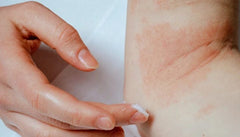


300+ clinicians, doctors, and dermatologists have shared Svens Island for eczema relief, with no compensation.
Key Takeaways
-
Eczema affects nearly 3 million Australians, and about 1 in 3 children aged 6 and under live with it.¹
-
Around half a million Australians live with moderate to severe eczema — the kind that disrupts sleep, work, and school.¹
-
Australian families spend roughly $100 a quarter on over-the-counter eczema products on top of prescription costs, and most still don't find lasting relief.²
-
Research shows 80–100% of eczema-prone skin carries Staphylococcus aureus — a bacterial imbalance strongly associated with flare cycles.³,⁴,⁵
-
May is Eczema Awareness Month in Australia, led by the Eczema Association of Australasia.
-
A natural, steroid-free daily routine — combined with understanding the bacterial cycle — can soothe skin and help calm flare-ups over time.
If you're reading this at 2am after another night of your child scratching until their skin bled, or you've quietly rearranged your life around a flare-up that won't settle — you already know what most Australians don't.
Eczema isn't "just dry skin." It's nearly 3 million people across the country living with a chronic skin condition that disrupts sleep, confidence, and daily life — and most of them have tried every cream on the chemist shelf without finding real relief.¹
May is Eczema Awareness Month in Australia, and it matters because awareness is still the biggest gap. In this article, we'll share the reality of eczema in Australia in 2026, why so many families feel stuck in the flare-relief-flare cycle, and what it actually takes to break the flare cycle for good.
The Reality of Eczema in Australia
Here's what the numbers look like once you start digging past the "itchy skin condition" label:
Nearly 3 million Australians live with eczema.¹ Around 1 in 3 children aged 6 or under have it.¹ And roughly half a million Australians live with moderate to severe eczema — the kind that wakes a family up at 3am, keeps teenagers home from the beach, and makes adults dread meetings because their hands are cracked and weeping.¹
Australia has one of the highest rates of eczema in the world, with some estimates putting the lifetime prevalence as high as 1 in 3 Australians at some point in their lives.⁶
The financial burden is real too. A 2020 survey from the Eczema Association of Australasia found that over half of eczema sufferers spend around $100 per quarter on over-the-counter products alone, on top of what they're spending on prescriptions.² For families managing a child's eczema, that adds up to dozens of failed creams a year.
The numbers are sobering. But they're also the reason Eczema Awareness Month matters: because behind every stat is a parent Googling at 2am, a teenager hiding their arms, or an adult who has stopped booking anything social during a flare.
What Australian Families Want You to Know
When you ask Australians living with eczema what they wish people understood, the same themes come up again and again.
"It's not just dry skin." Eczema is a chronic inflammatory skin condition, and the causes of eczema are complex — a compromised skin barrier, immune overreaction, and a shift in the skin's microbiome all play a part.⁷ Moisturising alone rarely addresses what's driving the flare cycle.
"Sleep is the first thing to go." For both kids and adults, eczema often flares worse at night. Children wake up multiple times a night scratching, and so do their parents. For adults with eczema, it's the same cycle without anyone to comfort you — lying awake, scratching, dreading going to work exhausted.

"The cost isn't just financial." Eczema affects school attendance, work productivity, relationships, and mental health. Research shows eczema severity is closely linked to higher rates of anxiety, depression, and sleep disturbance.⁷
"We've tried everything." The average eczema sufferer has cycled through dozens of products — supermarket creams, prescription steroids, natural oils, elimination diets. The exhaustion of that is hard to describe to anyone who hasn't lived it.
Why Most Eczema Creams Underdeliver
Here's the part most people don't know: research shows 80–100% of eczema-prone skin carries a bacteria called Staphylococcus aureus (or Staph), compared to around 20–30% of healthy skin.³,⁴,⁵ This bacterial imbalance is strongly associated with flare severity — the more Staph on the skin, the worse the flare tends to be.⁸
Most eczema creams are designed to do one job: moisturise. They add water and occlusives back to the skin barrier, which helps in the short term. But if the bacterial imbalance underneath is left unaddressed, the flare cycle keeps coming back — no matter how often you reapply.
This is why understanding the bacterial side of eczema matters. Consistent daily prevention that supports the skin barrier and helps calm the bacterial drivers of flares tends to outperform reactive treatment alone.
What Sven's Island Is Doing for Eczema Awareness Month
Sven's Island is proud to partner with the Eczema Association of Australasia — the national non-profit that's been supporting Australian families with eczema since 1994.
This May, every order of Miracle Manuka — our bacteria-fighting, barrier-supporting formula — directly supports the EAA, because we're matching every donation made at checkout, dollar for dollar, for the entire month.
It works simply: when you place an order with us in May, you'll see a donate button at checkout. Whatever you choose to contribute goes directly to the Eczema Association of Australasia — and we'll match it.
Every dollar donated supports eczema research, education, and family support across Australia. And every matched dollar doubles that impact.

Frequently Asked Questions
When is Eczema Awareness Month in Australia?
Eczema Awareness Month is held in May in Australia, led by the Eczema Association of Australasia. The month focuses on raising awareness of eczema's impact on almost 3 million Australians, supporting evidence-based skin barrier care, and advocating for better treatment and understanding of the condition.
How many Australians have eczema?
Nearly 3 million Australians live with eczema, including approximately 1 in 3 children aged 6 or under. Around half a million Australians live with moderate to severe eczema — a form of the condition that significantly disrupts sleep, school, work, and quality of life.¹
Why does eczema keep coming back no matter how many creams I try?
Most eczema creams only moisturise — but research shows 80–100% of eczema-prone skin also carries a bacteria called Staphylococcus aureus, which is associated with flare cycles.³,⁴,⁵ Addressing both the skin barrier and the bacterial imbalance tends to give more consistent results than moisturising alone.
What is the best natural eczema cream in Australia?
The best eczema cream for you depends on your skin, your triggers, and your routine. Look for a steroid-free, fragrance-free formula that supports both the skin barrier and helps calm the bacterial drivers of flares. Sven's Island Miracle Manuka Crème is clinically proven to fight Staph bacteria, backed by a 60-day money-back guarantee, and trusted by 100,000+ families.
A Final Word This Eczema Awareness Month
If you've been living with eczema — or caring for someone who is — you already know the weight of it. The sleepless nights, the failed products, the guilt, the quiet hope that maybe this one will finally help.
This Eczema Awareness Month, we want you to know: you're not imagining how hard it is. Nearly 3 million Australians are in this with you. And there are natural, evidence-led options that can help.
Try Sven's Island Miracle Manuka Crème Natural Eczema Relief for 60 days. If your skin doesn't improve, get your money back — no questions asked.
References
-
Health Care Consumers Association. Learn more about Eczema / Atopic Dermatitis. Citing Eczema Support Australia data: eczema affects nearly 3 million Australians, approximately 1 in 3 children aged 6 or under have eczema, and more than half a million Australians live with moderate to severe eczema. Available at: https://qum.hcca.org.au/about-eczema/
-
The Australian Society of Dermal Clinicians (ASDC). Eczema Awareness Month. Citing Eczema Association of Australasia (EAA) 2020 survey data: 51% of eczema sufferers self-report spending approximately $100 on prescriptions and $100 on OTC products per quarter. Available at: https://www.dermalclinicians.com.au/news/eczema-awareness-month
-
Breuer K, Häussler S, Kapp A, Werfel T. (1999). Staphylococcus aureus: colonizing features and influence of an antibacterial treatment in adults with atopic dermatitis. PubMed ID 9990408 — over 90% of atopic dermatitis patients are colonised with Staphylococcus aureus. Available at: https://pubmed.ncbi.nlm.nih.gov/9990408/
-
Totté JEE, van der Feltz WT, Hennekam M, et al. (2016). Prevalence and odds of Staphylococcus aureus carriage in atopic dermatitis: a systematic review and meta-analysis. Meta-analysis confirming S. aureus colonisation rates of 70–90% on lesional eczema skin compared to 20–30% of healthy skin. Referenced in: https://pmc.ncbi.nlm.nih.gov/articles/PMC11608963/
-
Geoghegan JA, Irvine AD, Foster TJ. (2018). Staphylococcus aureus and atopic dermatitis: a complex and evolving relationship. Trends in Microbiology. Referenced in Frontiers in Microbiology review. Available at: https://www.frontiersin.org/journals/microbiology/articles/10.3389/fmicb.2020.567090/full
-
Eczema Association of Australasia. About the EAA. Citing Australian lifetime prevalence data: Australia has one of the highest incidences of eczema in the world, affecting one in three Australians at some stage of their lives. Available at: https://eczema.org.au/about-us/
-
Chidwick K, Busingye D, Pollack A, et al. (2020). Prevalence, incidence and management of atopic dermatitis in Australian general practice using routinely collected data from MedicineInsight. Australasian Journal of Dermatology. Available at: https://pmc.ncbi.nlm.nih.gov/articles/PMC7496939/
-
Gong JQ, Lin L, Lin T, et al. (2006). Skin colonization by Staphylococcus aureus in patients with eczema and atopic dermatitis and relevant combined topical therapy: a double-blind multicentre randomized controlled trial. British Journal of Dermatology. Confirming correlation between S. aureus colonisation density and lesion severity. Available at: https://pubmed.ncbi.nlm.nih.gov/16965415/
Mentioned in this article
Works well with Eczema prone skin


- $52.80
-
$104.00 - $52.80
- -37%
- Unit price
- per


- $49.60
-
$89.00 - $49.60
- -30%
- Unit price
- per


- $79.20
-
$145.00 - $79.20
- -32%
- Unit price
- per


- $34.00
-
- $34.00
- -0%
- Unit price
- per


