



300+ clinicians, doctors, and dermatologists have shared Svens Island for eczema relief, with no compensation.
Key Takeaways
- Many eczema creams are designed to moisturise — they add water and occlusives back to the skin barrier, which helps in the short term but doesn’t stop the underlying flare cycle.
- R esearch shows up to about 90% of active eczema lesions carry Staphylococcus aureus (Staph bacteria) — a bacterial imbalance most standard creams simply don’t address.¹
- Staph produces toxins that disrupt the barrier, drive inflammation, and directly activate itch — meaning the cycle keeps going no matter how often you moisturise.
- Fragrance-free formulation matters more than most labels suggest — fragrance is a leading cause of contact reactions in already-compromised skin.
- The most effective daily formulas combine barrier repair with targeted antibacterial activity against Staph — not one or the other.
- What's on the ingredient list matters. Knowing what to look for helps cut through the noise.
If you're applying moisturiser consistently and still flaring, the cream probably isn't failing. It's just not designed to address what's actually driving the cycle. That distinction matters — because finding an effective eczema cream starts with understanding what the condition actually needs.
What Most Eczema Creams Are Designed to Do
Standard moisturisers — including most over-the-counter eczema creams — work by addressing transepidermal water loss (TEWL). They apply a combination of humectants (which draw water into the skin), emollients (which soften the skin surface), and occlusives (which form a layer that slows water from escaping).
This is a key step in managing eczema. A well-hydrated skin barrier is more resilient, less reactive, and better able to function as a protective seal.
The problem isn't what moisturisers do. It's what they don't do.

The Part Most Creams Miss
Research consistently shows that up to 90% of eczema-affected skin carries Staphylococcus aureus (Staph) — compared to around 5–30% of healthy skin. This isn't a sign of poor hygiene. It's a consequence of a compromised barrier that creates the exact conditions Staph needs to colonise: altered pH, reduced competing bacteria, and physical gaps for it to penetrate.
Staph doesn't just sit on the surface. It produces toxins that further disrupt the barrier, trigger inflammatory responses, and directly activate itch nerve receptors — meaning the itch-scratch-flare cycle keeps feeding itself, regardless of how well-moisturised the skin is.
This is why eczema keeps coming back even when you're applying cream every day. The hydration side is addressed. The bacterial side isn't.
A moisturiser applied to Staph-colonised skin will still do exactly what it's designed to do. It will not address what the Staph is doing underneath.

Why Fragrance Is a Bigger Problem Than Most People Realise
Walk into any chemist and pick up an eczema cream. Check the ingredient list for "fragrance" or "parfum."
Fragrance is one of the most common causes of contact dermatitis — an allergic or irritant reaction that compounds existing eczema. Many people managing eczema have already sensitised skin that reacts to fragrance compounds even at low concentrations. And because fragrance is a blanket term that can cover dozens of individual compounds, it's often impossible to identify exactly which one is causing the reaction.
"Unscented" is not the same as "fragrance-free." Unscented products can still contain fragrance compounds — added to mask the smell of other ingredients. Fragrance-free means no fragrance compounds at all.
For daily use on eczema-prone skin, fragrance-free isn't a bonus feature. It's a baseline requirement.
What About Steroids?
Topical steroids have their place in your eczema routine — they are effective at reducing inflammation during a flare, when used appropriately and as prescribed.
But they're not designed for continuous daily long-term use. Skin thinning, reduced effectiveness over time, and rebound flares are well-documented concerns with prolonged steroid use — and they're the reason most dermatologists prescribe them for short courses rather than ongoing maintenance.
Staph also complicates the picture further. Research has shown that Staph produces superantigens — compounds that can reduce skin responsiveness to corticosteroids over time. This helps explain why steroids that worked well initially can become less effective as eczema becomes more chronic.
What to Look for in an Eczema Cream
An effective daily eczema cream should do more than just moisturise — it should target the two main drivers of ongoing flares: barrier damage and Staph overgrowth.
Repair and support the skin barrier. Look for ingredients that reduce TEWL and support structural barrier repair — not just surface hydration. Occlusive and emollient ingredients together are more effective than humectants alone for compromised skin.
Address the bacterial environment. Look for ingredients with demonstrated antibacterial activity against Staph specifically — not broad-spectrum antibacterials that strip the skin's beneficial microbial community along with the harmful ones. Manuka leaf oil and Kanuka are botanicals with published research supporting targeted anti-Staph activity, including biofilm disruption.
Be fragrance-free. Non-negotiable for daily use on eczema-prone skin.
Be safe for consistent daily use. Steroids have their place for short-term flare control — but they're not designed for daily long-term use. A steroid-free formula gives you something you can apply every day, between flares and during them, without those concerns.
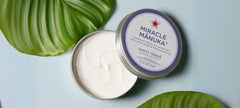
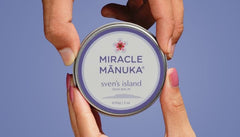
Sven’s Island Miracle Manuka Cream is formulated with Manuka leaf oil and Kanuka, botanicals shown in laboratory studies to fight Staph and help break up its biofilm, alongside marshmallow root to support barrier repair.³ It’s steroid‑free, fragrance‑free, and gentle enough for daily use from birth.
It's designed for consistent daily use that addresses both the barrier and bacterial sides of the eczema cycle. 95% of users noticed significant improvement after 2 weeks, and it's trusted by 150,000+ families managing eczema-prone skin.
What the Research Shows
The relationship between Staph colonisation and eczema severity is well-established. Research consistently shows Staph is present on up to 90% of eczema-lesional skin during active flares, with colonisation density correlating directly with disease severity.¹
Moisturisation alone — while essential — does not address the bacterial component of eczema. Studies support combining barrier repair with approaches that reduce Staph burden for more consistent long-term outcomes.²
Research into Manuka and Kanuka botanicals shows strong in vitro antibacterial activity against Staph, including disruption of biofilm formation.³ A randomised clinical trial found that a 3% Kanuka oil cream significantly improved symptoms in people with moderate-to-severe eczema.⁴
Fragrance compounds are among the most common contact allergens identified in people with atopic dermatitis, reinforcing why fragrance-free formulation is a clinical recommendation rather than a preference for people with eczema-prone skin.⁵
Frequently Asked Questions
Why do eczema creams stop working over time?
Most eczema creams only address hydration — not the bacterial imbalance that drives flares. When Staph is an active driver of the cycle, moisturising alone provides temporary relief without addressing the underlying mechanism. Additionally, prolonged steroid use can lead to reduced effectiveness and rebound flares. A formula that combines barrier repair with targeted antibacterial activity can deliver more consistent long-term results.
What ingredients should I look for in an eczema cream?
Look for steroid-free, fragrance-free formulas that support barrier repair — occlusives and emollients rather than humectants alone — alongside ingredients with demonstrated activity against Staph bacteria. Manuka leaf oil and Kanuka are botanicals with published research supporting anti-Staph activity. Avoid fragrance, alcohol, and broad-spectrum antibacterials that can disrupt the skin's beneficial bacterial community.
Are natural eczema creams better than prescription creams?
Not inherently — it depends on the formulation and what it's designed to do. The most important distinction is whether a cream addresses both the barrier and bacterial sides of eczema, is fragrance-free, and is appropriate for the frequency of use you need. Prescription steroids are effective for short-term flare management but aren't designed for daily long-term maintenance. That's where natural creams that are steroid-free and safe to use long-term fit in.
Why is fragrance-free important for eczema?
Fragrance is one of the most common contact allergens in people with eczema. Fragrance compounds — even at low concentrations — can trigger or worsen contact reactions on already-compromised skin. "Unscented" is not the same as fragrance-free. For daily use on eczema-prone skin, fragrance-free is a baseline requirement, not a preference.
How long does it take for an eczema cream to work?
Results depend on the formulation and consistency of use. A cream that only moisturises may provide noticeable hydration quickly but won't address the bacterial cycle — so flares return. A formula that addresses both barrier and bacterial balance tends to show more meaningful improvement with consistent use over two to four weeks. The 60-day guarantee that comes with Miracle Manuka Creme reflects this — real results take time and consistency.
A Final Thought
The reason so many eczema creams underdeliver isn't that they're ineffective. It's that they're built to do one job when eczema flares require two.
Moisturising matters. But if the bacterial side of the cycle isn't addressed, the moisture you're adding is going into skin that will keep flaring — because the mechanism driving the flare hasn't changed.
Knowing what to look for changes the conversation from "which cream haven't I tried yet" to "does this cream actually address what's keeping my eczema going."
More than 150,000 Australian families have made the switch. Try Sven's Island Miracle Manuka Creme for 60 days — if your skin doesn't improve, get your money back. No questions asked.
References
¹ Totté JEE, et al. (2016). Prevalence and odds of Staphylococcus aureus carriage in atopic dermatitis: a systematic review and meta-analysis. British Journal of Dermatology, 175(4):687–695. https://pubmed.ncbi.nlm.nih.gov/26994362/
² Weidinger S, Novak N. (2016). Atopic dermatitis. The Lancet, 387(10023):1109–1122. https://pubmed.ncbi.nlm.nih.gov/26377142/
³ Chen CC, et al. (2016). Investigations of kanuka and manuka essential oils for in vitro treatment of disease and cellular inflammation caused by infectious microorganisms. Journal of Microbiology, Immunology and Infection, 49(1):104-111. https://doi.org/10.1016/j.jmii.2013.09.005 (PubMed: https://pubmed.ncbi.nlm.nih.gov/24582465/)
⁴ Shortt N, et al. (2022). Efficacy of a 3% Kānuka oil cream for the treatment of moderate-to-severe eczema: A single blind randomised vehicle-controlled trial. eClinicalMedicine (Lancet), 51:101561. https://doi.org/10.1016/j.eclinm.2022.101561 (PubMed: https://pubmed.ncbi.nlm.nih.gov/35865740/)
⁵ Thyssen JP, Linneberg A, Menné T, Johansen JD. (2007). The epidemiology of contact allergy in the general population. Contact Dermatitis, 57(5):287–299. https://pubmed.ncbi.nlm.nih.gov/17937743/
⁶ American Academy of Dermatology. How to find eczema‑friendly products. AAD patient guidance. Available at: https://www.aad.org/public/diseases/eczema/childhood/triggers/friendly-products [Accessed: May 2026].
Mentioned in this article
Works well with Eczema prone skin


- $52.80
-
$104.00 - $52.80
- -37%
- Unit price
- per


- $49.60
-
$89.00 - $49.60
- -30%
- Unit price
- per


- $79.20
-
$145.00 - $79.20
- -32%
- Unit price
- per


- $34.00
-
- $34.00
- -0%
- Unit price
- per


