




300+ clinicians, doctors, and dermatologists have shared Svens Island for eczema relief, with no compensation.
Key Takeaways
- Eczema flares follow a self-reinforcing cycle: barrier damage → inflammation → Staph colonisation → itch → scratching → more barrier damage.
- Each stage makes the next one more likely — which is why flares can keep going even after the original trigger is long gone.
- Staphylococcus aureus (Staph bacteria) plays a central role in sustaining the cycle — present on up to 90% of eczema-affected skin during active flares.
- Staph forms biofilms and depletes the skin's natural antimicrobial defences — making it harder to shift once established.
- Research shows Staph can directly activate itch nerve receptors, independent of inflammation.
- Breaking the cycle requires addressing both the skin barrier and the bacterial environment — not just managing symptoms when they appear.
Eczema flares aren't random. They follow a predictable, self-perpetuating pattern. Once you understand how each stage triggers the next, you can finally see where real, lasting intervention is possible.
Most people focus on treating flares once they're already red, raw, and miserable. That's understandable — a bad flare demands attention. But the real opportunity lies in the quieter days between flares, when the cycle is most vulnerable to being interrupted. Understanding the mechanism is the first powerful step.
Stage 1: The Weakened Skin Barrier
Every eczema flare cycle begins with a compromised skin barrier. In healthy skin, the outer layer acts like a strong, flexible seal — locking moisture in and keeping irritants, allergens, and bacteria out. In eczema-prone skin, this seal is structurally weaker.
Many people with eczema carry mutations in the filaggrin gene, which produces a key protein for binding skin cells together and maintaining barrier integrity. With reduced filaggrin, the skin loses moisture faster, dries out easily, and allows bacteria and irritants to penetrate more readily.
Everyday triggers — heat, sweat, allergens, stress, rough fabrics, or even a change in weather — don't "cause" eczema so much as they exploit a barrier that's already vulnerable.

Stage 2: Inflammation Fires Up
Once the barrier is breached, the immune system overreacts. In eczema, this response is heavily skewed toward the Th2 pathway, flooding the skin with cytokines like interleukin-4 (IL-4) and interleukin-13 (IL-13). These chemicals drive redness, swelling, and hypersensitivity while actively suppressing the skin's ability to repair itself.
The result is a vicious feedback loop: inflammation further weakens the barrier, which invites even more immune activation. Skin becomes red, swollen, and extremely reactive. The itch threshold drops dramatically, so even minor stimuli can set off intense discomfort.
Stage 3: Staph Moves In
As the barrier weakens and inflammation builds, the skin's microbial environment shifts dramatically. Staphylococcus aureus (Staph bacteria) colonises up to 90% of eczema-affected skin during active flares — far higher than the 5–20% seen on healthy skin. Damaged skin with altered pH, reduced competing good bacteria, and physical gaps provides the perfect environment for Staph to thrive.
Two factors make Staph especially difficult to dislodge in eczema skin. First, eczema-prone skin is deficient in natural antimicrobial peptides such as LL-37, which normally help control bacterial populations. Second, Staph forms protective biofilms — layers that shield the bacteria from immune attacks and many treatments.
Beyond colonising, Staph actively worsens the problem. It releases toxins that amplify inflammation and produces superantigens that can make the skin less responsive to corticosteroids over time.
Most importantly, Staph can directly activate itch-sensing nerve receptors. Research has shown that Staph drives itch through a V8 protease–PAR1 axis, independent of the inflammatory response. The bacteria itself is literally signalling "scratch."
Stage 4: The Itch
By now the itch is relentless and exhausting — driven by inflammation, direct bacterial nerve activation, and hypersensitive skin. For children, scratching often happens unconsciously, especially at night. For adults, the constant battle to not scratch becomes its own form of fatigue.
This is why eczema and sleep problems so often go hand-in-hand. The itch doesn't just affect your skin — it steals your rest, your patience, and your peace of mind, night after night.
Stage 5: Scratching Closes the Loop
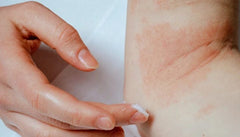
Scratching brings a few seconds of relief. But it physically rips away the already fragile outer skin layer, creating micro-tears and exposing fresh, vulnerable skin to the same hostile conditions. More barrier damage leads to more inflammation. More inflammation allows more Staph. More Staph intensifies the itch. The cycle completes — and begins again, often stronger than before.
Over time, repeated cycles can structurally change the skin, making certain areas chronically prone to flares.
How To Break The Cycle
This explains why eczema keeps coming back even when you’ve removed obvious triggers — the cycle develops its own momentum. Treating only the late stages (itch and scratching) provides temporary relief but leaves the root drivers untouched.
The most effective way to break the cycle is to act early and consistently:
- Support the skin barrier daily, not just during flares. A strong, well-maintained barrier reduces moisture loss and makes it much harder for bacteria to penetrate.
- Address the bacterial environment directly. This helps control Staph overgrowth and prevents it from fuelling inflammation and itch.
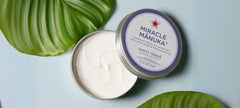
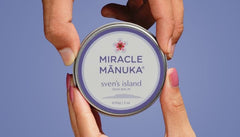
Sven’s Island Miracle Manuka Creme is formulated with Manuka leaf oil and Kanuka, both shown to have strong activity against Staph (including biofilms), along with marshmallow root to support barrier repair. It is steroid-free, fragrance-free, and safe from birth — designed for daily use between flares.
What the Research Shows
Research consistently describes eczema flares as a self-reinforcing loop driven by barrier dysfunction, immune dysregulation, and Staph colonisation.¹ Genetic filaggrin variants are one of the strongest identified risk factors for atopic dermatitis, directly increasing transepidermal water loss and reducing barrier integrity.²
Studies confirm Staph is present on up to 90% of eczema-lesional skin during active flares, with colonisation density correlating with flare severity.³ Research published in Cell demonstrated that Staph drives itch through a V8 protease–PAR1 axis — a mechanism independent of inflammation — explaining why Staph-colonised skin can itch intensely even when visible inflammation appears mild.⁴
The most effective long-term strategies combine consistent barrier support with measures that reduce Staph burden — proactively addressing both sides of the cycle rather than treating symptoms reactively.¹
Frequently Asked Questions
What causes an eczema flare cycle?
The eczema flare cycle is driven by a combination of barrier dysfunction, immune overreaction, and Staph colonisation. Each stage feeds the next — barrier damage allows Staph to colonise, Staph drives inflammation and itch, scratching causes more barrier damage — creating a self-reinforcing loop that continues long after the original trigger has been removed.
Why does eczema keep coming back in the same spots?
The same areas tend to flare repeatedly because the underlying barrier vulnerability doesn't resolve between flares. Repeated inflammation and scratching can structurally alter the skin over time, making specific areas more reactive and more susceptible to Staph colonisation than surrounding skin.
Can you break the eczema flare cycle?
Yes — but it requires addressing the cycle at multiple points, not just treating symptoms when they appear. Consistent daily barrier support reduces the conditions that make flares possible. Targeting Staph alongside barrier repair addresses the bacterial driver. Together, these approaches can increase the gap between flares and reduce their severity over time.
Does scratching make eczema worse?
Yes. While scratching provides momentary relief, it physically damages the skin barrier — creating micro-tears, removing the outer skin layer, and exposing fresh skin to the same conditions that drove the flare. Each scratch extends and deepens the cycle.
What is the role of Staph bacteria in eczema flares?
Staph is present on up to 90% of eczema-affected skin during flares. It forms protective biofilms, produces toxins that worsen inflammation and directly activate itch nerve receptors, and generates superantigens that can reduce the effectiveness of corticosteroids over time. Addressing Staph as part of daily eczema management is central to breaking the cycle.
A Final Thought
The flare cycle isn't something that randomly happens to you. It's a predictable biological mechanism — and predictable mechanisms can be interrupted.
The most powerful intervention isn't reacting faster when things get bad. It's the consistent daily support that keeps the barrier strong and the bacterial environment balanced between flares. That's where the cycle is most vulnerable.
More than 100,000 Australian families have made the switch. Try Sven's Island Miracle Manuka Creme for 60 days — if your skin doesn't improve, get your money back. No questions asked.
References
¹ Weidinger S, Novak N. (2016). Atopic dermatitis. The Lancet, 387(10023):1109–1122. https://pubmed.ncbi.nlm.nih.gov/26377142/
² Palmer CNA, Irvine AD, Terron-Kwiatkowski A, et al. (2006). Common loss-of-function variants of the epidermal barrier protein filaggrin are a major predisposing factor for atopic dermatitis. Nature Genetics, 38(4):441–446. https://pubmed.ncbi.nlm.nih.gov/16550169/
³ Totté JEE, et al. (2016). Prevalence and odds of Staphylococcus aureus carriage in atopic dermatitis: a systematic review and meta-analysis. British Journal of Dermatology, 175(4):687–695. https://pubmed.ncbi.nlm.nih.gov/26994362/
⁴ Deng L, et al. (2023). Staphylococcus aureus drives itch and scratch-induced skin damage through a V8 protease–PAR1 axis. Cell, 186(24):5375–5393. https://pubmed.ncbi.nlm.nih.gov/37995657/
Mentioned in this article
Works well with Eczema prone skin


- $52.80
-
$104.00 - $52.80
- -37%
- Unit price
- per


- $49.60
-
$89.00 - $49.60
- -30%
- Unit price
- per


- $79.20
-
$145.00 - $79.20
- -32%
- Unit price
- per


- $34.00
-
- $34.00
- -0%
- Unit price
- per


