




300+ clinicians, doctors, and dermatologists have shared Svens Island for eczema relief, with no compensation.
You finish the steroid cream course. Your skin clears. A week later eczema comes back - redder, itchier, and harder to calm than before.
If this sounds familiar, you're not imagining it and you're not doing anything wrong. What you're experiencing has a name: steroid rebound. It's a well-documented response to stopping topical corticosteroids, and understanding why it happens is what allows you to manage it - and eventually break the cycle.
What Is Steroid Rebound?
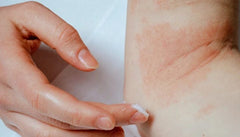
Steroid rebound is the return and intensification of eczema symptoms when a topical steroid course is stopped or reduced. The inflammation that was being suppressed comes back - often harder than before, and sometimes spreading beyond the original affected area.
It's often confused with topical steroid withdrawal (TSW), but they're not the same thing. TSW is a more severe, distinct syndrome associated with longer-term steroid use. It involves symptoms that go beyond eczema - widespread burning, oozing, and skin sensitivity across areas that weren't originally affected. TSW is more debilitating, longer-lasting, and increasingly recognised by dermatologists as its own condition requiring specific management.
Most people who experience worsening after stopping a steroid course are dealing with rebound, not TSW. The risk of rebound is higher with more potent formulations, longer duration of use, and application to sensitive areas like the face, neck, and skin folds.
Why Rebound Happens
To understand rebound, it helps to understand what topical steroids are doing while they're being applied.
Topical corticosteroids work by suppressing the immune response in the skin - reducing the inflammation that causes redness, itch, and swelling. They do this effectively. But they don't address what's driving the inflammation in the first place: a structurally weakened skin barrier, a bacterial imbalance on the skin surface, and an immune system that's chronically activated.
While steroids are applied, these underlying drivers continue. The barrier doesn't fully repair. Staphylococcus aureus (Staph) - the bacteria closely associated with eczema flares - is often still present on the skin surface, and the overall microbiome balance is not restored. The immune system's inflammatory pathways stay primed, held in check only by the steroid's suppressive effect.
When steroids are stopped, that suppression lifts. The immune system rebounds - often more aggressively than before. The barrier is still compromised. The microbial environment is still out of balance. The inflammatory pathways that were suppressed fire back with less restraint. The result is a flare that feels worse than the original, because the underlying conditions driving it haven't improved.

The Bacterial Component of Rebound
One aspect of rebound that's rarely discussed is the role Staph plays in making it worse.
During a steroid course, inflammation is suppressed - but Staph and the broader bacterial imbalance on the skin surface are not directly addressed. When the steroid course ends and inflammation rebounds, it does so on skin where this imbalance often still exists.
Staph makes rebound worse in two ways. First, its toxins directly stimulate itch receptors and trigger immune responses - adding to the inflammatory load on skin that's already reacting. Second, it actively disrupts the barrier repair process that needs to happen for the skin to stabilise after a rebound episode.
This is why rebound flares often feel particularly hard to control - the inflammation returning is compounded by bacterial activity that standard steroid treatment never addressed.
What Actually Helps During Rebound
Rebound is uncomfortable and demoralising. The most important thing to understand is that it's temporary - the skin will stabilise. How quickly that happens depends largely on what's done during the rebound period.
Don't stop steroids abruptly if you've been using them long-term. Gradual reduction rather than sudden cessation reduces the severity of rebound. If you've been using steroids regularly for an extended period, speak to your doctor about a tapering plan rather than stopping cold.
Support the barrier immediately. The skin coming off a steroid course has a compromised barrier and needs consistent support. Apply a barrier-repair product daily - morning and evening - starting as the steroid course ends, not after the rebound has already taken hold.
Address the bacterial environment. This is the step most people miss. Applying a antimicrobrial product that actively fights Staph during and after a steroid course addresses the bacterial driver of rebound that steroids alone can't reach. Manuka leaf oil has been specifically studied for its ability to fight Staph, including disrupting the biofilms bacteria form on the skin surface.
Keep the skin cool and moisturised. During rebound, skin is hypersensitive. Avoid hot water, fragrance, and anything that raises skin temperature. Cool, damp compresses provide relief without worsening inflammation.
Be consistent, not reactive. The instinct during rebound is to reach for the steroid cream again. For mild cases this may be appropriate under medical guidance. But applying barrier and bacterial balance support consistently gives the skin a chance to stabilise on its own terms - reducing the likelihood of the same cycle repeating.

Breaking the Cycle Long-Term
Consistent daily use of a barrier-supportive, bacteria-aware product in the periods between steroid courses changes the pattern. It gives the barrier a genuine opportunity to strengthen. It reduces Staph levels so the next potential trigger lands on skin that's better equipped to handle it. And it reduces the frequency and severity of the flares that prompt reaching for steroids in the first place.
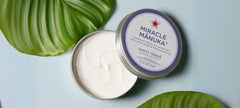
Sven's Island Miracle Manuka Cream is formulated for this kind of consistent daily use - Manuka leaf oil and marshmallow root working alongside barrier-supportive botanicals like coconut oil, gentle enough for daily use from birth, as a complement to prescribed treatment rather than a replacement for it.
What the Research Shows
Research confirms steroid rebound is a real, predictable response to stopping topical corticosteroids - and highlights why underlying issues like barrier weakness and bacterial imbalance make it worse. A 2023 review in the British Journal of Dermatology documented topical steroid withdrawal syndrome, with rebound flares occurring in up to 12% of long-term users, often featuring intense redness, burning, and spread beyond treated areas.¹
Staph colonisation doesn't resolve with steroids alone. Studies show Staph persists or recolonises quickly after treatment, with one analysis finding 70-90% of eczema skin still carrying it post-steroid course, fuelling inflammation rebound.² ³
Steroids can also compromise the barrier long-term. Research shows prolonged use depletes stratum corneum lipids, increases transepidermal water loss, and delays repair - leaving skin more vulnerable when suppression lifts.⁴ Tapering reduces severity compared to abrupt stops per expert guidance, though direct randomised data is limited.⁵ Consistent barrier support alongside steroids cuts flare frequency by 50% and steroid use by 30%, giving skin a chance to stabilise post-course.⁶
These patterns explain rebound's intensity: steroids mask but don't fix the drivers, so flares return harder.
Frequently Asked Questions
Is steroid rebound the same as eczema coming back?
Not exactly. Steroid rebound refers to a flare that's more intense than the original, often with additional symptoms like burning and spreading redness. When eczema returns after a steroid course it can also be the original condition reasserting itself - both can occur together, but rebound has a specific biological mechanism distinct from simple recurrence.
How long does steroid rebound last?
For standard rebound after a short course, symptoms usually peak within a week or two and settle over two to four weeks with consistent barrier support. TSW associated with longer-term use can last weeks to months. If symptoms are severe or not improving, a dermatologist can help assess what's being experienced.
Should I use steroids again during rebound?
This depends on severity. For mild rebound, consistent barrier and bacterial balance support without returning to steroids gives the skin a chance to stabilise. For severe rebound, a doctor may recommend a short supervised course. The key is not to reflexively restart the same pattern that created the rebound.
Can rebound be prevented?
It can be reduced in severity. Using the minimum effective potency for the shortest necessary period, tapering rather than stopping abruptly, and starting a barrier-supportive routine alongside the steroid course all help. Addressing Staph during and after treatment further reduces the bacterial component of rebound.
Is steroid rebound dangerous?
Standard rebound is uncomfortable but not dangerous - a temporary intensification of inflammation that settles with appropriate support. On the other hand, Topical Steroid Withdrawal in severe cases warrants medical supervision. A dermatologist can help distinguish between rebound, TSW, and other conditions that present similarly.
Final Thought
Steroid rebound isn't a sign that eczema is getting worse permanently - or that steroids have failed. It's a predictable response to stopping a treatment that was suppressing symptoms without addressing what was driving them.
Understanding that reframes what to do next. Not more steroids, not panic - but consistent support for the barrier and the bacterial environment that steroids never touched.
The cycle can be broken. It just requires addressing the right things in the right order.
References
¹ Shibley et al. (2023), Br J Dermatol. https://academic.oup.com/bjd/article/188/2/288/6795529
² Nilsson (1992), Acta Derm Venereol. https://pubmed.ncbi.nlm.nih.gov/1619073/
³ Breuer et al. (2002), Br J Dermatol. https://academic.oup.com/bjd/article-abstract/155/4/680/6637101
⁴ Fluhr et al. (1999), Br J Dermatol. https://academic.oup.com/bjd/article-abstract/136/6/884/6681749
⁵ Ramien et al. (2024), StatPearls. https://www.ncbi.nlm.nih.gov/books/NBK603718/
⁶ Hon et al. (2013), BMC Dermatol. https://pmc.ncbi.nlm.nih.gov/articles/PMC3665665/
Mentioned in this article
Works well with Eczema prone skin


- $52.80
-
$104.00 - $52.80
- -37%
- Unit price
- per


- $49.60
-
$89.00 - $49.60
- -30%
- Unit price
- per


- $79.20
-
$145.00 - $79.20
- -32%
- Unit price
- per


- $34.00
-
- $34.00
- -0%
- Unit price
- per


