



300+ clinicians, doctors, and dermatologists have shared Svens Island for eczema relief, with no compensation.
If you've been managing eczema for any length of time, you've probably had the same conversation with your doctor more than once. Steroid cream. Apply for a few days. Don't use too much. Come back if it doesn't clear.
And it does clear. For a while. Then it comes back.
It's not just you - this is a predictable outcome of a treatment that addresses symptoms without touching the underlying cause.
Steroid creams are effective tools in your eczema arsenal - but they were never designed to be a long-term solution. Understanding why opens the door to what actually works alongside or instead of them.
What Steroid Creams Do - and What They Don't
Topical corticosteroids reduce inflammation quickly by suppressing the immune response in the skin. For an acute flare, this is genuinely useful. Redness calms. Itch reduces. The skin looks and feels better.
The problem is what they don't do.
Steroid creams don't repair the skin barrier. They don't address the bacterial imbalance on the skin surface that sustains and worsens flares. They don't change the underlying sensitivity of eczema-prone skin.
When the course ends, the skin is calmer but structurally unchanged - and the same conditions that triggered the last flare are still present.
Long-term or frequent use must be considered carefully. Prolonged application can thin the skin over time, and in some cases lead to a rebound effect when you stop - where inflammation returns harder than before.
These aren't reasons to fear steroids, but they are reasons to look for approaches that reduce how much you need to rely on them.

Why Moisturising Isn't Enough Either
The standard advice alongside steroids is to moisturise. Regularly, generously, and consistently. This is genuinely important - a well-moisturised barrier is more resilient and less reactive.
But moisturising addresses just one driver of eczema: dryness. It doesn't address the bacterial environment on the skin surface. It doesn't replace the lipids and fatty acids the barrier loses with every flare. And for many people with eczema, it doesn't stop the cycle.
The gap most people fall into is treating eczema as a dryness problem when it's actually a barrier and bacterial balance problem. Filling that gap is where steroid alternatives have the most to offer.
What Actually Drives the Eczema Cycle
To understand what alternatives can and can't do, it helps to understand what's actually sustaining the cycle.
Two things are usually still going on under the surface, even when eczema looks calm: a structurally weakened skin barrier that hasn't fully recovered, and a bacterial imbalance - particularly elevated Staphylococcus aureus (Staph) - that keeps the inflammatory cycle going.
The barrier weakness is often genetic. Many people with eczema produce less of a structural protein called filaggrin, which means the outer skin layer is more porous, loses moisture faster, and is more easily penetrated by irritants.
The bacterial component amplifies everything. Staph doesn't cause eczema, but its presence on inflamed skin intensifies the immune response, disrupts barrier repair, and directly activates itch receptors. Treatments that only calm inflammation leave both of these drivers untouched.
Effective alternatives work on one or both of these levels - supporting the barrier and addressing the bacterial environment - rather than suppressing symptoms alone.
The Main Steroid Cream Alternatives
Barrier Repair Creams and Emollients
These are the foundation of any steroid-free approach. Unlike standard moisturisers, barrier repair formulations are designed to restore the specific lipids and fatty acids the skin barrier needs to function properly - not just add surface hydration.
Look for ingredients like niacinamide, which supports barrier integrity and reduces inflammation, and plant-based oils that replicate the skin's natural fatty acid profile.
The key difference from standard moisturisers is consistency of use. Barrier repair products need to be applied daily - not just during flares - to give the barrier a real chance to strengthen over time.
Antimicrobial and Bacteria-Aware Formulations
Most eczema products moisturise the skin. Almost none address the bad bacteria living on it.
Products designed to help maintain bacterial balance on the skin surface work differently from standard barrier creams. Rather than just hydrating, they create a skin environment where Staph is less able to thrive, disrupting the bacterial cycle that standard creams never touch.
Manuka leaf oil - distinct from Manuka honey - has been researched specifically for its ability to fight Staph and reduce itch.
Marshmallow root extract supports barrier repair from within, helping to soothe irritated skin and restore the skin's own protective function.
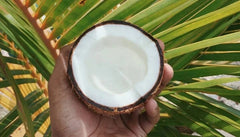
Coconut oil provides deep hydration while contributing its own natural antimicrobial properties.
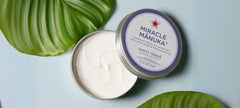
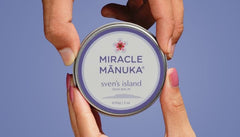
Sven's Island Miracle Manuka Cream combines these ingredients to address both drivers of recurring eczema - bacterial balance and barrier repair - in a way that standard treatments don’t.
Wet Wrap Therapy
Wet wrapping involves applying moisturiser or a prescribed cream to the skin and then covering it with wet bandages or clothing, followed by a dry layer. It's most commonly used for children during severe flares.
The technique works by forcing deep hydration into the skin, reducing itch through cooling, and creating a physical barrier against scratching overnight. It's not a long-term daily solution, but it can provide meaningful relief during acute episodes, particularly for children, and may reduce the need for high-potency steroids in the short term.
Antihistamines
Oral antihistamines reduce the histamine-driven component of itch and can help with sleep during flares - particularly sedating formulas used at night. They don't address barrier function or bacterial balance, so they work best as part of a broader approach rather than a standalone solution.
Prescription Non-Steroid Options
For moderate to severe eczema that isn't responding to topical treatments, prescription non-steroidal options exist. Calcineurin inhibitors like tacrolimus and pimecrolimus reduce immune activity in the skin without the skin-thinning risk of steroids - they're often used on sensitive areas like the face and eyelids.
Dupilumab, a biologic injection that targets the specific inflammatory pathways involved in eczema, has shown strong results for severe cases. These options are prescribed and managed by dermatologists, and are beyond the scope of daily over-the-counter management - but they're worth knowing about if eczema is significantly affecting quality of life and topical approaches aren't providing enough control.
What the Research Shows
Studies on prolonged topical corticosteroid use have linked it to skin atrophy (thinning) from chronic application - helping explain why long-term reliance on steroids creates problems of its own.¹
Manuka leaf oil (from Leptospermum scoparium) shows strong in vitro antimicrobial activity against Staphylococcus aureus, the key bacteria that overgrows on eczema-prone skin and worsens inflammation and flares.
Studies confirm low minimum inhibitory concentrations (MIC) of 0.233 mg/ml and minimum bactericidal concentrations (MBC) of 0.466 mg/ml against S. aureus strains, including resistant ones.² It also disrupts biofilms – the protective layers bacteria form on skin – with eradication concentrations around 14.922 mg/ml.²
This targeted action helps control bacterial overgrowth without steroids' immune suppression, supporting better balance and longer-term skin stability.
Wet wrap therapy holds up in clinical trials as an option for relief in severe flares, though one randomised study in children found it reduced eczema severity scores similarly to standard care (with added practical challenges).³
Calcineurin inhibitors like tacrolimus offer a strong alternative for sensitive areas such as the face and eyelids, providing comparable long-term efficacy to steroids but without the risk of skin thinning.⁴
For moderate to severe cases, the LIBERTY AD trials of dupilumab (combined with topical steroids) delivered impressive results, with major reductions in eczema severity and sustained improvements over time.⁵
Transitioning away from steroid dependence isn't wishful thinking – the evidence supports it.
How to Transition Away From Steroid Dependence
If the goal is to reduce reliance on steroids over time, the approach matters. Stopping suddenly - particularly after prolonged use - can trigger rebound inflammation. The better path is gradual.
Continue using steroids as prescribed during acute flares while building a consistent daily routine with a barrier-first, bacteria-aware product.
Over weeks and months, as the barrier strengthens and bacterial balance improves, the conditions that trigger flares become less frequent. Many people find they need steroids less, because there's less to treat.
Sven's Island Miracle Manuka Cream is formulated for exactly this kind of daily use – Manuka leaf oil and marshmallow root for bacterial balance and barrier repair, safe from birth, dermatologist-recommended as a complement to medical care.
Frequently Asked Questions
Are steroid creams bad for eczema?
Not inherently. Topical steroids are effective at managing acute flares and have a legitimate role in eczema care.
The concern is long-term or frequent reliance - they don't address the underlying weak barrier and bacterial drivers of recurring eczema, and prolonged use can cause skin thinning. The goal for most people is to use them when needed while building a daily routine that reduces how often they're needed.
What is the most effective natural alternative to steroid creams?
There's no single answer - effective management usually combines barrier repair with bacterial balance support.
Manuka leaf oil is clinically proven to fight 99% of Staph, while barrier-supportive oils – like marshmallow root – support the skin's structural recovery. Consistent use is just as important as choosing the right ingredients.
Can you use steroid creams and natural alternatives together?
Yes, and this is often the most practical approach.
Steroids during acute flares, barrier-supportive and bacteria-aware products daily between flares. The two aren't in conflict - they address different parts of the problem.
How long before steroid alternatives start working?
Meaningful improvement in barrier strength and flare frequency typically takes four to eight weeks of consistent daily use.
The first changes most people notice are reduced itch intensity and better skin comfort - the longer gaps between flares come later.
Expecting immediate results comparable to steroids will lead to disappointment; these products work on a different timeline and a different mechanism.
Are natural alternatives safe for babies and children?
They can be, but formulation matters. Look specifically for products tested and rated safe from birth, fragrance-free, and without common irritants. Products designed for eczema-prone skin from infancy are a different category from general "natural" skincare.
Final Thought
Steroid creams aren't the enemy. But for the many people who feel trapped in a cycle of flare, treat, and repeat, they're also not the full answer.
The alternatives aren't about replacing medicine with wishful thinking. They're about addressing the parts of the eczema cycle that steroids were never designed to touch - a weakened barrier, a bacterial imbalance, a skin environment that keeps resetting to the same vulnerable state.
Building a routine that works on both levels is what moves eczema from something you're constantly managing to something that's genuinely under control.
References
¹ Barnes L et al. (2015), Drug Safety. https://pubmed.ncbi.nlm.nih.gov/25862024/
² Pedonese F et al. (2022), Italian Journal of Food Safety. https://pmc.ncbi.nlm.nih.gov/articles/PMC8883831/
³ Hindley D et al. (2006), Archives of Disease in Childhood. https://pubmed.ncbi.nlm.nih.gov/16308411/
⁴ Siegfried EC et al. (2016), BMC Pediatrics. https://link.springer.com/article/10.1186/s12887-016-0607-9
⁵ Blauvelt A et al. (2017), The Lancet. https://www.thelancet.com/journals/lancet/article/PIIS0140-6736(17)31191-1/fulltext
Mentioned in this article
Works well with Eczema prone skin


- $52.80
-
- $52.80
- -0%
- Unit price
- per


- $49.60
-
- $49.60
- -0%
- Unit price
- per


- $79.20
-
$145.00 - $79.20
- -32%
- Unit price
- per


- $34.00
-
- $34.00
- -0%
- Unit price
- per


